14 September 2026
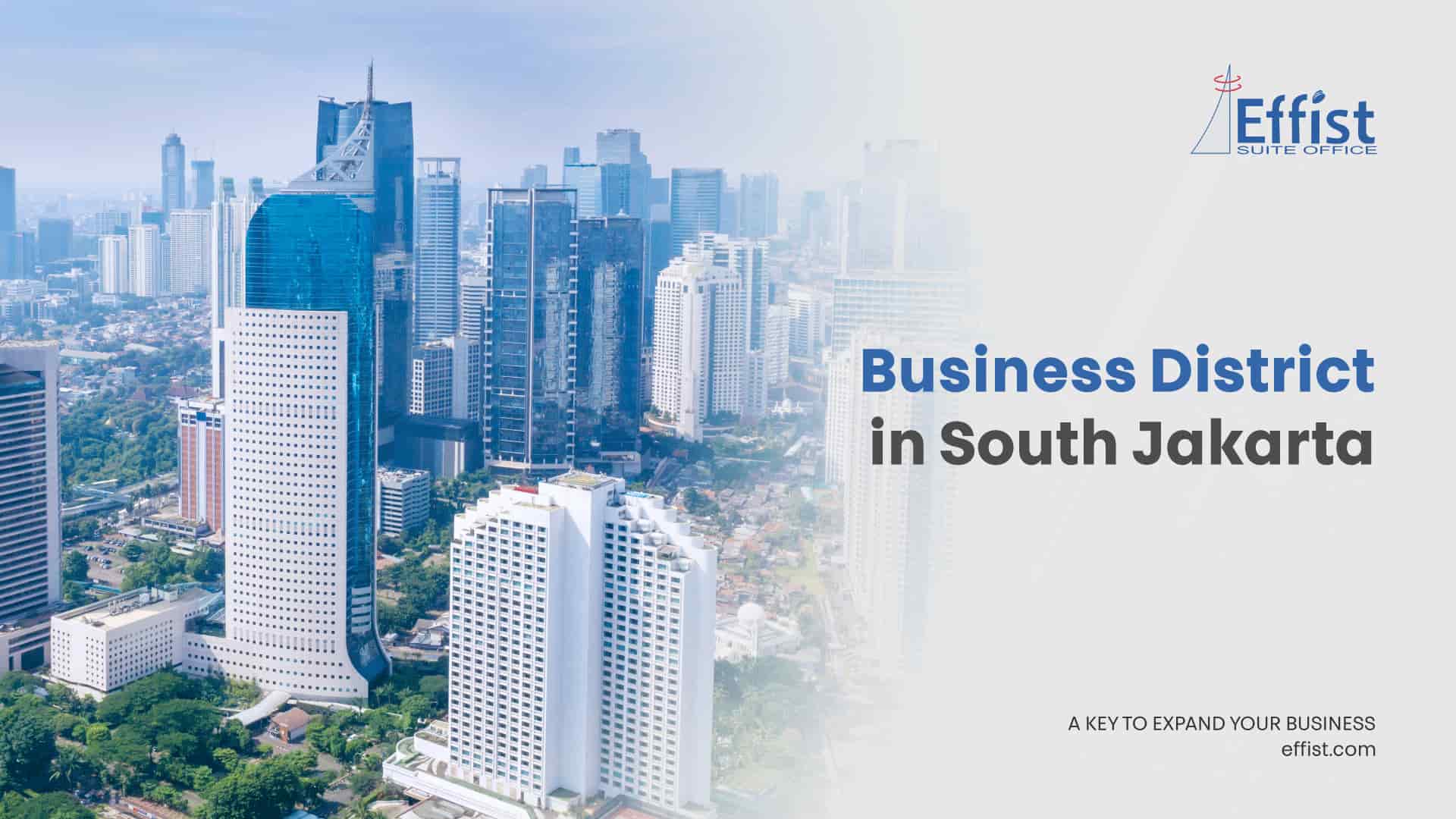
Top 6 Business Districts in South Jakarta Every Business Must Know
Choosing the right location for your business is critical to drive operational efficiency and growth. As one of Jakarta's most dynamic areas, South Jakarta is known to have many major business districts. Each business district in South Jakarta offers plenty of unique advantages, from convenient transportation networks to access to a skilled talent pool.
Setting up an office in a strategic district like South Jakarta offers valuable opportunities for networking and growth. This article guides you to South Jakarta's business districts and why they are worth considering for your business's next location.
What is a Business District?
A business district refers to an area of a city or town with a high concentration of many businesses and commercial activities, like offices, banks, shops, government offices, restaurants, hotels, etc. It is located in strategic areas and serves as important economic centers for a city.
Business districts are often equipped with modern infrastructure, convenient transportation options, and a wide range of services that enhance the overall working experience. Establishing a company in a strategic location like a business district contributes to building credibility and a professional image. This makes business districts highly desirable locations for startups, growing enterprises, and established corporations alike.
Why is South Jakarta a Strategic Location for Business?
South Jakarta can be considered one of the most popular business districts in Indonesia. This is due to a number of reasons, including:
Major Business Hubs of Jakarta
South Jakarta is home to several prominent business districts, including Sudirman, Kuningan, and Gatot Subroto. These areas accommodate corporate offices, financial institutions, multinational companies, technology firms, and professional service providers. Close proximity to these business hubs allows companies to operate and reach important clients, business partners, investors, and other key industry players. This also makes business meetings and networking more convenient, especially for companies that frequently interact with their stakeholders.
Convenient Transport Links
Another reason why South Jakarta is a strategic business location is its comparatively well-developed transportation network. South Jakarta is connected by various major roads and highways and is served by plenty of public transportation options. This includes MRT Jakarta, TransJakarta, LRT Jakarta, trains, and other modes of transport. Easy transportation access helps employees and clients to reach the office. For companies, this can support employee mobility and improve business operations' efficiency.
Access to a High-Quality Talent Pool
The location of your company can influence how you can get the best talent to support business growth. Many excellent talents consider the company's location when accepting a job offer, especially its accessibility and proximity to nearby amenities such as public transportation, dining options, and lifestyle facilities. South Jakarta's strategic location can be a strong point for companies to attract high-quality candidates. Its connectivity also allows employees from other parts of Jakarta and surrounding areas to commute to the district.
Boost Professional Business Image
Where your company is located shapes how people perceive your brand. Many customers consider checking the company's location before making further steps. South Jakarta is home to many major business districts well-known for their professional environment. Doing business in South Jakarta can strengthen your company's reputation significantly. Not only that, a strategically located office can make it more convenient to meet clients and business partners, allowing you to build long-term strategic partnerships.
Suitable for Different Business Needs
Being a strategic business district, South Jakarta provides more than just traditional office spaces. From conventional corporate offices to serviced offices, virtual offices, coworking spaces, and meeting rooms to rent, South Jakarta offers various workspace options to suit different business needs. Whether you're a startup, multinational company, or remote-based business, this flexibility allows you to choose a location based on your operational requirements, team size, and budget, while still enjoying access to South Jakarta's strategic location.
6 Business Districts in South Jakarta That Worth Setting Up In
Choosing the right location can impact your business's accessibility, visibility, and growth potential. South Jakarta offers several business districts with excellent infrastructure and strategic advantages you should consider:
Tebet
The first business area recommendation in South Jakarta is Tebet. This area has developed into an affordable business hub for companies of all sizes. Tebet features proper road infrastructure and access to integrated public transportation, such as trains, MRT, and TransJakarta. You can also spot various supporting amenities in Tebet, such as shopping centers, restaurants, apartments, and hotels to support work-life balance. Tebet is an ideal location for those looking to establish a business in a strategic area of South Jakarta with budget-friendly office options, such as serviced office, virtual office, or coworking space.
Gandaria City Superblock
Your next business district recommendation in South Jakarta is Gandaria City Superblock. Being a "superblock", this district integrates a shopping center, office spaces, and a residential area within one single area. It is located near other premium South Jakarta business centers, such as Kebayoran Lama and Pondok Indah. Gandaria City Superblock offers a premium and exclusive environment with direct access to various amenities, making it an attractive option to establish a business. You can not only enhance your professional image but also improve work-life balance.
Sudirman Central Business District (SCBD)
Sudirman Central Business District (SCBD) can be considered one of the most prominent business areas in South Jakarta. Situated along Jalan Jenderal Sudirman, SCBD is a planned and gated superblock that integrates office towers, international hotels, shopping centers, and luxurious apartments. It also provides convenient access to major roads and public transportation, including MRT and TransJakarta. SCBD's strategic location alongside its polished and corporate environment makes it a great option for companies seeking a prestigious location to boost business presence.
Kuningan
Kuningan business district in Jakarta is known as the international business district due to its high concentration of international corporations and foreign embassies. It is located in the Golden Triangle of Jakarta with easy access to nearby business hubs, such as Sudirman and Gatot Subroto. The area features a modern urban layout designed to support convenient business activities. Its professional atmosphere, combined with lush, green surroundings, makes Mega Kuningan a popular choice for many companies. Furthermore, the area's proximity to toll roads and public transportation networks facilitates relatively easy mobility for employees and visitors alike.
Thamrin
The Thamrin district is one of South Jakarta's most vital economic hubs due to its high accessibility and integrated transportation networks. Located near Sudirman, Thamrin is renowned for its array of premium office buildings and government offices, as well as amenities such as shopping malls and hotels. The area is served by the MRT and TransJakarta networks and is situated close to major shopping centers like Grand Indonesia and Plaza Indonesia. Its strategic location makes Thamrin a top choice for companies that prioritize ease of mobility and brand exposure.
Gatot Subroto
Gatot Subroto is a major business district in South Jakarta featuring numerous modern office buildings and comprehensive supporting facilities. It is highly popular among business owners due to its proximity to other major business hubs such as Thamrin, Senayan, and Slipi. The area is also easily accessible via toll roads and public transportation, making it a strong choice for companies looking for a strategic location at a more affordable price compared to areas like SCBD.
Make Your Business Stand Out in South Jakarta’s Top Business Districts with Effist Suite Office
Establishing your business in a strategic location like South Jakarta provides greater visibility, convenience, and access to Jakarta's thriving business ecosystem. However, establishing an office in a prime location doesn't have to be complicated or involve high upfront costs. As one of the top office space providers in South Jakarta, Effist Suite Office offers fully-equipped serviced offices designed to help your business get started quickly and efficiently.
Our office spaces are equipped with complete facilities, including an ergonomic workstation, high-speed internet, executive work equipment, meeting rooms of various sizes, a business lounge, pantry, and professional secretarial and cleaning services. Located at South Jakarta's prime business hubs, EightyEight@Kasablanka and Gandaria 8 Tower, Effist Suite Office makes it easy to establish your business presence in South Jakarta’s strategic districts. Simply move in, start operating, and let us handle your office space needs.
Contact us via email contact@effist.com for more information regarding our serviced office solutions.
Editor: Trie Ayu Feminin & Irnadia Fardila
08 September 2026
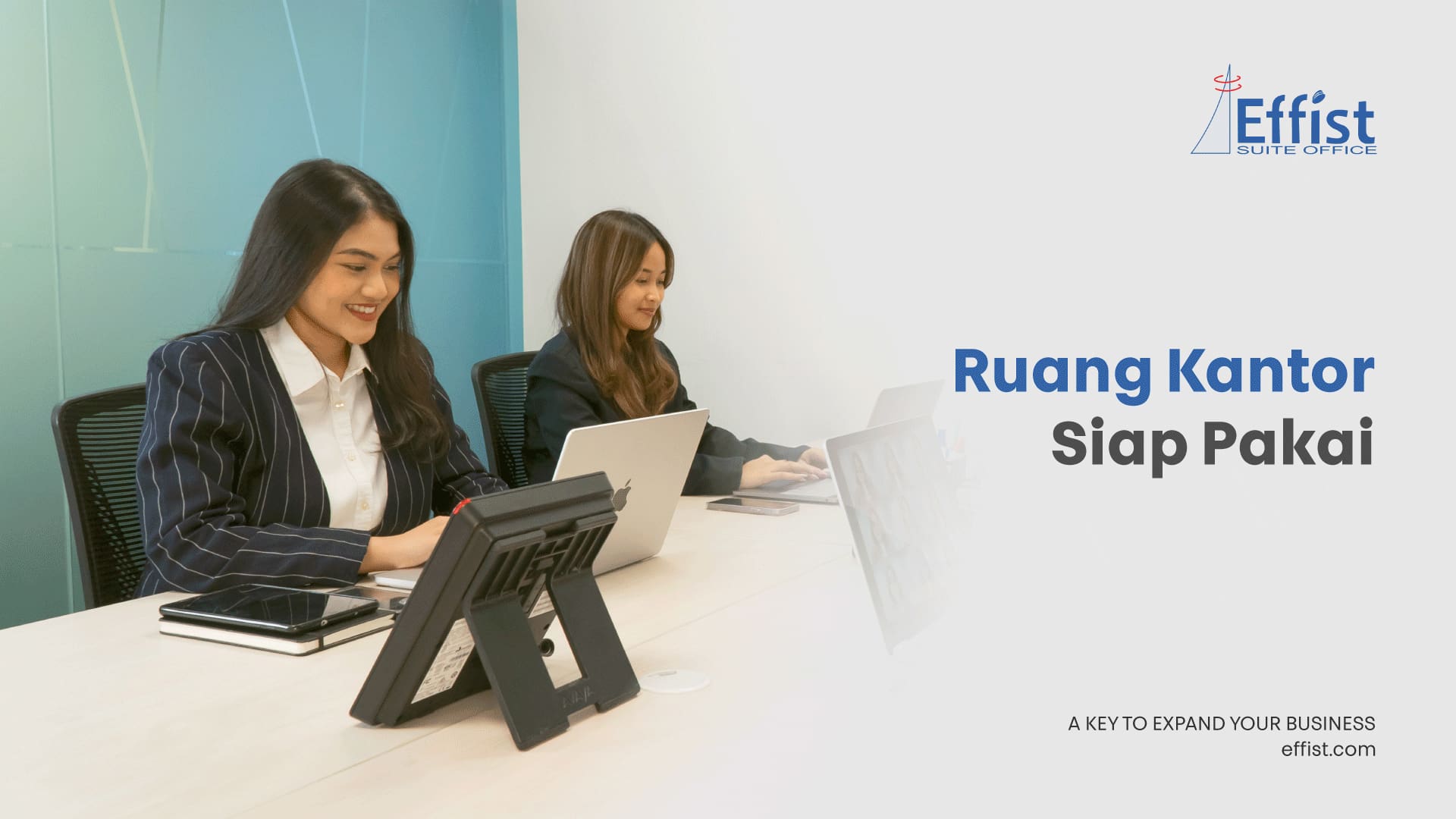
Fungsi Ruang Kantor Siap Pakai Sebagai Solusi Ruang Kerja Praktis
Banyak perusahaan mulai meninggalkan model ruang kantor tradisional yang mengharuskan mereka untuk menyewa dan membangun ruang kerja dari awal. Hal ini tidak hanya kurang fleksibel untuk memenuhi kebutuhan bisnis yang selalu berubah-ubah. Perusahaan juga dapat menghabiskan waktu dan biaya yang cukup besar untuk menata ruang kantor tradisional. Solusi ruang kantor siap pakai muncul sebagai solusi untuk perusahaan yang ingin beroperasi secara praktis tanpa perlu memusingkan pengadaan dan penataan furniture kantor.
Solusi ruang kantor siap pakai merupakan bagian dari layanan serviced office. Pada layanan ini, perusahaan dapat menyewa ruang kantor dengan fasilitas lengkap dengan kapasitas sesuai kebutuhan mereka. Artikel ini akan memandu Anda tentang ruang kantor siap pakai, termasuk cara kerjanya hingga rekomendasi layanan yang bisa Anda pertimbangkan.
Bagaimana Cara Kerja Ruang Kantor Siap Pakai?
Cara kerja ruang kantor siap pakai melibatkan penyedia layanan serviced office sebagai pengelola ruang kerja dan perusahaan atau tim yang menggunakan ruang kerja tersebut. Penyedia layanan serviced office menyewakan ruang kerja siap pakai yang sudah dilengkapi dengan fasilitas perkantoran memadai. Dengan demikian, perusahaan dapat langsung pindah dan menggunakan ruang kantor tersebut tanpa harus menata ulang dari awal.
Dalam prosesnya, perusahaan dapat menghubungi penyedia layanan serviced office untuk mendiskusikan kebutuhan ruang kantor mereka serta durasi penyewaan ruang kantor. Jika perusahaan merasa cocok dengan ruang kantor yang disewakan, perjanjian sewa dapat ditandatangani. Perusahaan pun dapat langsung menempati ruangan dan beroperasi. Aspek lainnya seperti pemeliharaan fasilitas dan kebersihan ruangan sudah dikelola oleh penyedia serviced office. Dengan demikian, perusahaan dapat lebih fokus pada operasional bisnis mereka.
Fasilitas yang Tersedia di Ruang Kantor Siap Pakai
Ketersediaan fasilitas kantor siap pakai diperlukan untuk menjalankan operasional bisnis yang efisien. Beberapa contoh fasilitas yang bisa Anda temukan di ruang kantor siap pakai adalah:
- Furniture Kantor Premium: Guna menunjang kenyamanan dan produktivitas kerja, ruang kerja siap pakai sudah dilengkapi furniture berkualitas. Hal ini termasuk meja dan kursi ergonomis, lemari penyimpanan, dan perlengkapan kantor lainnya. Furniture kantor berkualitas premium membantu menciptakan lingkungan kerja yang profesional dan efisien untuk karyawan.
- Jaringan Internet Berkecepatan Tinggi: Dunia kerja yang serba digital membuat jaringan internet berkecepatan tinggi menjadi fasilitas standar yang disediakan ruang kerja siap pakai. Koneksi internet yang stabil memudahkan komunikasi secara online, kolaborasi aktif antar karyawan dan tim, video conference, maupun aktivitas bisnis lainnya.
- Akses ke Meeting Room: Anda tidak hanya mendapatkan ruang kerja dengan fasilitas lengkap, tetapi juga akses ke meeting room profesional dengan perlengkapan memadai. Meeting room dalam berbagai ukuran tersedia untuk mewadahi rapat internal, presentasi bisnis, meeting dengan klien, dan lainnya. Ruang meeting modern mendukung diskusi yang lebih produktif serta menciptakan kesan profesional bagi peserta rapat.
- Layanan Business Support: Penyedia serviced office juga menyediakan layanan business support untuk membantu kelancaran operasional bisnis Anda. Layanan ini dapat meliputi resepsionis, pengelolaan surat dan paket, IT support, administrative support, dan sebagainya.
- Layanan Kebersihan dan Pemeliharaan Fasilitas: Penyedia serviced office memastikan kenyamanan Anda selama bekerja melalui layanan kebersihan dan pemeliharaan fasilitas yang dilakukan secara rutin. Hal ini juga memastikan area kantor beserta fasilitasnya tetap bersih, berfungsi dengan baik, dan siap digunakan.
Alasan Banyak Pelaku Usaha Beralih ke Ruang Kantor Siap Pakai
Menyewa ruang kerja siap pakai menjadi solusi praktis bagi perusahaan untuk langsung beroperasi tanpa harus melalui proses persiapan yang panjang. Beberapa alasan mengapa ruang kerja siap pakai semakin diminati adalah:
Ruang Kerja Bisa Langsung Digunakan
Salah satu keunggulan utama dari ruang kerja siap pakai adalah ruangannya yang sudah dilengkapi dengan fasilitas perkantoran memadai, sehingga Anda bisa langsung menggunakannya. Hal ini sangat membantu untuk perusahaan yang perlu segera menjalankan operasional bisnis tanpa harus terhambat oleh lamanya waktu untuk dekorasi atau penataan furniture kantor. Waktu yang dapat dihabiskan untuk renovasi atau persiapan kantor dapat dipangkas secara signifikan.
Menghemat Waktu dan Biaya
Pada beberapa ruang kantor tradisional, Anda mungkin hanya mendapatkan ruangan kosong tanpa fasilitas kantor yang dibutuhkan. Hal ini tidak hanya memakan banyak waktu, tetapi juga biaya yang besar. Layanan ruang kerja siap pakai mengurangi beban ini dengan menyediakan fasilitas memadai sesuai kebutuhan bisnis. Dana yang digunakan untuk renovasi kantor bisa dialokasikan untuk kebutuhan lain yang lebih strategis, seperti inovasi produk atau ekspansi bisnis.
Lebih Fleksibel
Kebutuhan ruang kantor dapat berubah-ubah seiring dengan perkembangan bisnis. Jumlah karyawan Anda dapat bertambah, atau Anda mungkin memerlukan ruangan tambahan untuk kebutuhan tertentu. Ruang kerja siap pakai menawarkan fleksibilitas tinggi untuk menyesuaikan kebutuhan ruang kerja sesuai kondisi perusahaan saat ini. Jadi, Anda tidak harus terikat pada ruang kantor yang terlalu besar atau terlalu kecil ketika kondisi bisnis mengalami perubahan.
Meningkatkan Citra Profesional
Lokasi dan penampilan kantor dapat mempengaruhi persepsi perusahaan Anda di hadapan klien atau mitra bisnis. Ruang kerja siap pakai umumnya dirancang dengan tampilan profesional dan dilengkapi fasilitas seperti business lounge dan meeting room untuk mengadakan diskusi penting. Selain memberikan kenyamanan bagi karyawan, lingkungan kantor profesional dapat membantu Anda menciptakan kepercayaan dan kredibilitas saat menerima klien atau mitra bisnis.
Siapa Saja yang Cocok Memakai Ruang Kantor Siap Pakai?
Layanan ruang kantor siap pakai menawarkan fleksibilitas untuk berbagai jenis bisnis tanpa harus repot menyiapkan ruang kerja dari awal. Adapun beberapa jenis bisnis yang dapat memanfaatkan solusi ruang kerja ini adalah:
Startup
Perusahaan startup yang baru merintis dapat menggunakan ruang kantor siap pakai untuk menghemat waktu dan biaya dalam menjalankan operasional bisnis. Banyak startup terkendala oleh terbatasnya budget yang dimiliki, sehingga ruang kerja siap pakai dapat menjadi solusi praktis yang ramah biaya. Startup bisa langsung beroperasi tanpa harus melakukan dekorasi atau membeli perlengkapan kantor.
Small and Medium Enterprises (SMEs)
Jenis usaha small and medium enterprises (SMEs) dapat menggunakan ruang kerja siap pakai sebagai solusi untuk memiliki ruang kerja profesional dengan biaya terjangkau. Dengan biaya yang lebih fleksibel, anggaran bisa dialokasikan ke kebutuhan bisnis lainnya yang lebih strategis.
Freelancer dan Konsultan
Bisnis konsultan seperti firma hukum, agensi kreatif, atau freelancer bisa memanfaatkan ruang kantor siap pakai untuk mendapatkan lingkungan kerja yang lebih profesional dibandingkan bekerja dari rumah atau kafe. Fasilitas seperti meeting room dan business lounge juga dapat meningkatkan kredibilitas saat bertemu dengan klien atau mitra bisnis.
Tim Remote dan Hybrid
Bisnis dengan sistem kerja remote atau hybrid tidak selalu beroperasi langsung di kantor, sehingga mereka tidak selalu memerlukan ruang kantor tradisional dengan kapasitas besar. Ruang kantor siap pakai bisa digunakan secara fleksibel jika karyawan memerlukan tempat untuk bekerja sama, mengadakan rapat, atau bertemu klien.
Perusahaan Asing yang Masuk ke Indonesia
Banyak perusahaan asing mendirikan representative office sebagai cara untuk membangun kehadiran bisnis selama proses ekspansi tanpa harus terlibat dalam aktivitas komersil. Perusahaan asing bisa memakai ruang kantor siap pakai sebelum berkomitmen dalam melakukan ekspansi bisnis sepenuhnya. Solusi ruang kantor ini menawarkan fleksibilitas sambil memahami kebutuhan operasional dan pasar lokal.
Rekomendasi Layanan Ruang Kantor Siap Pakai di Jakarta Selatan
Bagi Anda yang mencari layanan sewa kantor siap pakai di kawasan strategis seperti Jakarta Selatan, berikut adalah beberapa rekomendasi untuk dipertimbangkan:
Effist Suite Office EightyEight@Kasablanka
Rekomendasi layanan ruang kantor siap pakai yang pertama adalah Effist Suite Office yang berada di gedung EightyEight@Kasablanka. Layanan ruang kantor ini terletak strategis di kawasan Tebet yang terintegrasi dengan transportasi umum seperti TransJakarta, kereta, dan LRT. Jaraknya juga relatif dekat ke kawasan bisnis Jakarta Selatan lainnya, seperti Kuningan dan Sudirman. Effist Suite Office di gedung EightyEight@Kasablanka menawarkan lingkungan kerja yang dinamis dengan akses mudah ke pusat perbelanjaan dan apartemen.
Selain keunggulan dari segi lokasi, Effist Suite Office juga didukung dengan fasilitas berkualitas tinggi. Hal ini termasuk ruang kerja lengkap dengan fasilitas pendukung, internet berkecepatan tinggi, layanan resepsionis profesional, pantry, business lounge, serta akses ke meeting room untuk memfasilitasi pertemuan bisnis Anda. Dengan konsep ruang kerja yang modern dan fleksibel, Effist Suite Office di EightyEight@Kasablanka menjadi pilihan tepat bagi Anda yang mengutamakan efisiensi, kenyamanan, dan mobilitas tinggi.
Effist Suite Office Gandaria 8 Tower
Pilihan layanan ruang kantor siap pakai berikutnya adalah Effist Suite Office di gedung Gandaria 8 Tower. Layanan ruang kantor ini menawarkan ruang kerja premium di lokasi strategis yang berdekatan dengan kawasan Kebayoran Lama dan Pondok Indah. Berlokasi di dalam area Gandaria Superblok, Effist Suite Office memiliki akses mudah ke pusat perbelanjaan, jalan utama, transportasi umum, serta berbagai fasilitas penunjang kebutuhan bisnis.
Effist Suite Office di Gandaria 8 Tower menyediakan ruang kantor siap pakai dengan fasilitas lengkap untuk menunjang kegiatan operasional yang lebih praktis dan efisien. Fasilitas yang tersedia meliputi koneksi internet berkecepatan tinggi, business lounge untuk menerima tamu, pantry, layanan resepsionis profesional, hingga meeting room dengan pilihan ukuran yang beragam.
Dengan suasana kerja yang modern dan eksklusif, Effist Suite Office di Gandaria 8 Tower cocok bagi perusahaan yang ingin membangun citra profesional sekaligus menghadirkan lingkungan kerja yang nyaman.
Effist Suite Office: Mitra Andalan untuk Ruang Kantor Profesional dan Siap Pakai di Jakarta Selatan
Beralih ke layanan ruang kantor siap pakai dapat menjadi langkah strategis bagi Anda yang ingin menjalankan bisnis dengan lebih fleksibel tanpa harus memusingkan pengadaan maupun pemeliharaan furniture.
Effist Suite Office hadir sebagai mitra andalan Anda dalam menyediakan ruang kantor siap pakai berkualitas melalui layanan serviced office. Kami berlokasi strategis di kawasan bisnis Jakarta Selatan, yaitu EightyEight@Kasablanka dan Gandaria 8 Tower. Hal ini tidak hanya mendukung operasional yang lebih efisien, tetapi juga reputasi bisnis yang lebih kredibel dan terpercaya.
Dengan fasilitas lengkap seperti workstation ergonomis, internet berkecepatan tinggi, akses ke meeting room dalam berbagai ukuran, business lounge, pantry, serta layanan sekretarial dan kebersihan, Anda dapat langsung bekerja dengan nyaman sejak hari pertama. Jadi, Anda tidak perlu lagi membuang waktu dan biaya untuk mempersiapkan ruang kerja Anda.
Percayakan kebutuhan ruang kantor siap pakai Anda kepada Effist Suite Office dan wujudkan lingkungan kerja profesional yang mendukung produktivitas serta perkembangan bisnis.
Hubungi kami melalui email contact@effist.com untuk informasi lebih lanjut seputar layanan serviced office atau mulai konsultasi seputar kebutuhan ruang kantor Anda.
Editor: Trie Ayu Feminin & Irnadia Fardila

07 September 2026
Registered Business Address: Create a Stronger Corporate Presence
When setting up a business, having a registered business address is important, as it serves as the company's official domicile. This address is commonly used for legal documents, government correspondence, business registration, and communication with clients or partners. A proper registered address can also help establish credibility and ensure that your business meets applicable legal and administrative requirements. This article will guide you into what a registered business address is, the key requirements, and its importance.
What is a Registered Business Address?
A registered business address is the official physical address a company uses when registering or incorporating. It serves as the company's formal legal and administrative address to receive official correspondence from government entities, banks, legal representatives, and other institutions. Companies typically include the registered address in their business documents, such as contracts, invoices, and company profiles, as well as on their social media and websites.
In Indonesia, every business must have a registered business address to complete their company registration process and obtain Nomor Induk Berusaha (NIB), the mandatory license to operate legally. Having a registered business address is important not only for legal and administrative purposes but also for presenting a more professional image to clients and partners.
What are the Requirements for a Registered Business Address in Indonesia?
Not every address qualifies as a registered business address. There are several requirements a business should check before registering their official address:
- Complete and Valid Physical Address: First, the registered office address of a company must be valid and verifiable for legal and administrative purposes. The company will register the address into the Online Single Submission (OSS) system as part of the business registration process. The Deed of Establishment, Nomor Induk Berusaha (NIB), and tax documents will include this address across all documents.
- Zoning Compliance: The registered business address must comply with the zoning and spatial-planning regulations applicable to the location. The business activity should be permitted within the designated zoning area. Depending on the type, scale, and location of the business, the company may also need to fulfil Kesesuaian Kegiatan Pemanfaatan Ruang (KKPR) requirements through the OSS system.
- Suitability for the Company's Business Activities: The business address should be appropriate for the company's intended activities. Certain industries, such as manufacturing, restaurants, or warehousing, may have specific location and operational requirements that can't be fulfilled by a regular office address.
- Consistency with Corporate and Licensing Records: The registered address should be consistent across the company's relevant documents and licensing systems, including in its corporate information and Nomor Induk Berusaha (NIB) registered through OSS. Any changes to the address should be properly updated in the relevant records.
Can I Register a Business at My Home Address?
Many small businesses consider using their home as their business address. While this can be cost-effective and convenient, it's often not a sustainable choice in the long run. First, your business may seem less professional to clients, investors, or partners, hindering the opportunity to build long-lasting relationships and credibility. Your home address will also be publicly available in business registration records, potentially compromising your and your family's privacy and leading to unwanted mail, sales calls, and other security risks. Moreover, in many cases, an address in a residential area may not be permitted for business registration.
Why is a Registered Business Address Important?
A registered company address is more than just a legal requirement for your business. It also plays several important roles in how your business operates and is perceived, including:
Establishing a Professional Image
Your company's location can shape how clients and partners perceive your business. Registering your business in a prestigious business area can significantly improve your professional image and credibility. Demonstrating reliability and stability to clients, investors, and partners is crucial to build strong business relationships. Since many prospective customers check a company's address on its website or business card before making contact, having a strategic business address can make a strong positive impression right from the start.
Protecting Your Privacy
Having a registered business address allows you to separate your business and personal information. Instead of using your home address for business registration, which later will become public records, you can use a dedicated business address. This not only helps maintain your personal privacy, but also provides a more professional environment for you and your team.
Legal Compliance
A registered business address is an important requirement for maintaining a company’s legal and administrative status. It provides an official location where government authorities, clients, and other stakeholders can send legal documents and business correspondence. Having a valid address also helps ensure that the company complies with applicable business registration and regulatory requirements.
Operational Convenience
A business address not only serves as your company's official location. It also serves as your central operations hub, making it easier to manage business correspondence, official documents, and other business matters. This ensures that all important letters are received and managed promptly. It also keeps personal and business matters separate, preventing confusion between home and work matters.
Benefits of Using a Serviced Office as a Registered Business Address
Obtaining a registered business address doesn't always require buying an entire property for your company. A serviced office has become one of the most popular alternatives for businesses to obtain a registered company address. A serviced office refers to a fully furnished, ready-to-use private workspace managed by a third-party provider. You can rent a serviced office flexibly, whether short- or long-term, and pay a single all-inclusive monthly fee that covers rent, utilities, internet, maintenance services, etc.
Serviced office solutions, such as Effist Suite Office, are located in prestigious business areas of Jakarta, allowing you to project a professional image and comply with zoning regulations. You can also access various support services, such as mail handling, reception, professional meeting rooms, and administrative assistance. A serviced office is a practical solution for all kinds of businesses that need a compliant address while also operating efficiently, without committing to a long-term physical office lease.
Secure a Professional Registered Business Address with Effist's Serviced Office Solutions
Securing a professional registered business address can be an important step toward establishing a credible and compliant business presence. With Effist Suite Office’s serviced office solutions, you can obtain a prestigious business address while enjoying a fully equipped workspace without the hassle of setting up and maintaining a conventional office.
Located at EightyEight@Kasablanka and Gandaria 8 Tower, our serviced offices provide ergonomic workstations, high-speed internet, professional meeting rooms in various sizes, executive office equipment, business lounges, pantry facilities, and reliable secretarial and cleaning services. Whether you are establishing a new business or expanding your operations, Effist makes it easy to start working immediately in a professional environment.
Ready to secure your registered business address with a flexible, hassle-free office solution tailored to your business needs?
Contact us via email contact@effist.com for more information regarding our service office solutions.
Editor: Trie Ayu Feminin & Irnadia Fardila

01 September 2026
Panduan Pemakaian Virtual Office untuk Pendirian PT di Indonesia
Perseroan Terbatas (PT) termasuk salah satu jenis badan usaha yang paling banyak digunakan oleh pengusaha di Indonesia karena memiliki struktur bisnis yang lebih jelas serta peluang pengembangan bisnis yang lebih luas. Namun, proses pendirian PT memerlukan persiapan pada berbagai aspek, termasuk alamat bisnis dan domisili perusahaan. Layanan virtual office muncul sebagai alternatif untuk mendapatkan alamat bisnis yang dibutuhkan saat mendirikan PT. Layanan virtual office memungkinkan PT memiliki alamat bisnis profesional tanpa perlu menyewa ruang kantor fisik secara penuh.
Artikel ini akan memandu Anda tentang penggunaan virtual office untuk pendirian PT di Indonesia.
Apakah PT Bisa Menggunakan Virtual Office?
Saat mendaftarkan Perseroan Terbatas (PT), pengusaha perlu menentukan lokasi tempat PT tersebut beroperasi. Jika PT masih belum memiliki kantor fisik, layanan virtual office dapat digunakan sebagai alamat PT resmi untuk didaftarkan di situs Online Single Submission (OSS). Namun, perlu diketahui bahwa tidak semua PT dapat menggunakan virtual office sebagai alamat domisili. Sebagai contoh, usaha yang memerlukan pabrik atau konstruksi fisik tidak dapat menggunakan virtual office sebagai alamat resmi.
Apakah Virtual Office Legal di Indonesia?
Banyak orang masih meragukan legalitas virtual office untuk pembuatan PT. Di Indonesia, penggunaan virtual office sebagai alamat bisnis resmi sudah diakui secara hukum. Dalam Pasal 1 angka 75 Permenkeu Nomor 54 Tahun 2025, virtual office atau kantor virtual adalah kantor yang memiliki ruang fisik dan dilengkapi dengan layanan pendukung kantor yang disediakan oleh pengusaha jasa kantor virtual.
Pemilihan layanan virtual office sebagai domisili PT juga tidak bisa sembarangan. Virtual office yang digunakan harus berlokasi di zona yang memang diperuntukkan sebagai zona perkantoran atau zona perdagangan jasa. Lokasi di luar zona tersebut umumnya tidak dapat digunakan sebagai domisili usaha. Selain itu, alamat virtual office yang bersifat fisik akan memudahkan proses pengecekan pendirian PT jika diperlukan.
Keuntungan Menggunakan Virtual Office untuk Pendirian PT
Beberapa keuntungan yang bisa dirasakan dari pemakaian virtual office untuk pembuatan PT adalah:
Menghemat Biaya Operasional
Virtual office hadir sebagai solusi alternatif bagi pendiri PT yang ingin mendaftarkan usaha mereka tanpa terbebani biaya kantor fisik yang tinggi. Melalui virtual office, Anda dapat mengurangi pengeluaran yang berkaitan dengan penyewaan ruang kantor fisik. Anda dapat mengalokasikan biaya pada strategi dan pengembangan bisnis yang lebih penting, seperti inovasi produk baru, strategi marketing, software dan tools penunjang kerja, dan lain-lain.
Memperkuat Citra Bisnis Profesional
Layanan virtual office umumnya berlokasi di kawasan bisnis yang prestisius. PT yang menggunakan layanan virtual office dapat diuntungkan melalui reputasi bisnis profesional yang muncul jika terdaftar di kawasan bisnis tersebut. Meskipun Anda tidak beroperasi secara langsung di kantor fisik, Anda tetap dapat mempertahankan citra bisnis yang kredibel di mata klien, mitra bisnis, maupun investor.
Akses Mudah ke Fasilitas Pendukung
Meskipun tidak menyewa ruang kantor fisik, Anda tetap dapat mengakses fasilitas pendukung operasional bisnis saat menggunakan layanan virtual office. Sebagai contoh, penyedia virtual office menawarkan meeting room profesional yang bisa Anda gunakan untuk pertemuan dengan klien. Fasilitas lainnya yang bisa Anda manfaatkan termasuk ruang kantor on-demand, nomor telepon bisnis khusus, serta pengelolaan surat dan paket masuk.
Dapat Mendukung Kerja Remote
Virtual office mendukung Anda dan tim Anda untuk bekerja dari mana saja tanpa harus bergantung pada kantor fisik. Anda dapat menerapkan kebijakan kerja remote yang fleksibel sambil tetap menjaga citra bisnis profesional melalui alamat resmi dari virtual office yang berlokasi strategis. Hal ini sangat penting untuk mewujudkan work-life balance dan meningkatkan produktivitas kerja.
Prosedur Mendirikan PT dengan Virtual Office
Berikut adalah prosedur yang Anda ikuti untuk mendirikan PT menggunakan layanan virtual office:
Tentukan Nama PT
Langkah pertama adalah menentukan nama PT yang akan didirikan. Berdasarkan Peraturan Pemerintah No. 43 Tahun 2011, penamaan PT perlu mengikuti ketentuan berikut:
- Ditulis dalam huruf latin.
- Belum dipakai secara sah oleh perseroan lain.
- Tidak bertentangan dengan ketertiban umum dan/atau kesusilaan.
- Tidak sama/mirip dengan nama lembaga negara apapun kecuali mendapat izin dari yang bersangkutan.
- Tidak terdiri atas angka atau rangkaian kata, huruf atau rangkaian huruf yang tidak membentuk kata.
- Sesuai dengan maksud, tujuan, dan kegiatan usaha perseroan.
Pemesanan nama PT dapat dilakukan melalui sistem Administrasi Hukum Umum (AHU) Kementerian Hukum dan HAM melalui situs https://ahu.go.id. Anda akan diminta mengisi informasi seperti tiga pilihan nama PT, bidang usaha yang dijalankan, serta data pendiri perusahaan.
Pilih Layanan Virtual Office yang Tepat
Selanjutnya, pilih layanan virtual office sesuai kebutuhan Anda. Pertimbangkan lokasi, fasilitas, serta dukungan administrasi yang ditawarkan penyedia virtual office untuk memudahkan pendirian dan operasional PT Anda. Pastikan juga alamat virtual office dapat digunakan untuk kebutuhan domisili perusahaan. Layanan virtual office seperti Effist Suite Office menawarkan berbagai paket layanan dengan benefit beragam yang bisa Anda pilih sesuai kebutuhan bisnis saat ini.
Susun Akta Pendirian PT
Langkah selanjutnya adalah menyusun Akta Pendirian PT melalui notaris. Sebelum membuat akta, diperlukan setidaknya dua nama pendiri untuk menjadi Direktur dan Komisaris PT. Anda juga perlu menentukan jangka waktu berdirinya PT serta maksud dan tujuan kegiatan usaha PT. Pada tahap ini, notaris akan mencantumkan alamat virtual office yang sudah disewa sebagai alamat resmi PT Anda.
Akta akan memuat nama perusahaan, bidang usaha sesuai kode KBLI, modal dasar dan modal yang disetor, struktur direksi dan komisaris, serta alamat perusahaan berupa virtual office. Selanjutnya, Akta Pendirian akan diajukan ke Kementerian Hukum dan HAM untuk mendapatkan Surat Keputusan (SK) Pengesahan PT.
Mengurus NPWP dan NIB
Tahap berikutnya adalah mengurus NPWP dan NIB untuk PT Anda. NPWP diperlukan untuk memenuhi kewajiban perpajakan perusahaan Anda sesuai dengan status dan kegiatan usaha. Anda bisa mengurus NPWP dengan datang langsung ke Kantor Pelayanan Pajak di domisili kantor Anda atau secara online.
Sedangkan NIB berfungsi sebagai bukti perizinan PT Anda untuk melakukan kegiatan usaha. Anda bisa membuat NIB melalui situs Online Single Submission (OSS). Anda akan diminta untuk mengisi data yang dibutuhkan, seperti data pelaku usaha, data bidang usaha, serta data produk atau jasa dalam bidang usaha. Pastikan Anda mengisi data dengan lengkap dan benar untuk memudahkan pemrosesan NIB.
Rekomendasi Layanan Virtual Office Terbaik di Jakarta Selatan untuk PT Anda
Bagi Anda yang ingin menggunakan layanan virtual office untuk kebutuhan pendirian PT, berikut adalah rekomendasi layanan virtual office terbaik di Jakarta yang bisa Anda pertimbangkan:
Effist Suite Office EightyEight@Kasablanka
Rekomendasi layanan virtual office di Jakarta yang pertama adalah Effist Suite Office yang berlokasi di gedung EightyEight@Kasablanka. Terletak di kawasan bisnis Kuningan dan Tebet, lokasi ini memiliki akses strategis ke berbagai opsi transportasi umum, jalan utama, pusat perbelanjaan, hotel, apartemen, maupun fasilitas penunjang bisnis lainnya.
Effist Suite Office di EightyEight@Kasablanka menawarkan berbagai fasilitas pendukung operasional bisnis. Hal ini termasuk alamat bisnis prestisius, layanan mail handling dan forwarding, resepsionis profesional, nomor telepon bisnis khusus, layanan call answering dan forwarding, serta central fax line. Anda juga bisa menikmati fasilitas di lokasi fisik Effist Suite Office, seperti smart meeting room, ruang kerja on-demand, dan business lounge.
Effist Suite Office Gandaria 8 Tower
Pilihan layanan virtual office di Jakarta selanjutnya adalah Effist Suite Office di gedung Gandaria 8 Tower. Layanan ini terletak di kawasan strategis Jakarta Selatan yang berdekatan dengan kawasan Kebayoran Lama dan Pondok Indah. Berada di dalam kawasan Gandaria Superblok, layanan virtual office Effist Suite Office memiliki akses mudah menuju pusat perbelanjaan, jalan utama, transportasi umum, maupun fasilitas pendukung lainnya.
Effist Suite Office Gandaria 8 Tower menyediakan layanan virtual office yang dilengkapi berbagai fasilitas untuk menunjang kebutuhan operasional perusahaan. Fasilitas tersebut meliputi alamat bisnis profesional, layanan mail handling dan forwarding, resepsionis profesional, nomor telepon bisnis khusus, layanan call answering dan forwarding, serta central fax line. Selain itu, Anda dapat menggunakan fasilitas di kantor fisik Effist Suite Office, seperti dukungan administrasi, meeting room profesional, ruang kerja siap pakai, dan business lounge.
Butuh Virtual Office untuk PT? Temukan Solusi Virtual Office Praktis dari Effist Suite Office
Alamat bisnis PT yang strategis tidak hanya bermanfaat untuk melengkapi kebutuhan pendirian perusahaan, tetapi juga sebagai investasi jangka panjang untuk membangun reputasi profesional. Layanan virtual office dari Effist Suite Office dapat menjadi solusi praktis bagi Anda yang memerlukan alamat bisnis resmi tanpa perlu menanggung biaya operasional kantor fisik yang besar. Dengan alamat bisnis yang berlokasi strategis di pusat bisnis Jakarta Selatan, yaitu EightyEight@Kasablanka dan Gandaria 8 Tower, Anda dapat meningkatkan kredibilitas dan citra bisnis dengan alamat bisnis profesional dalam biaya yang terjangkau.
Effist Suite Office juga menyediakan berbagai fasilitas untuk mendukung operasional bisnis Anda. Hal ini termasuk layanan mail handling, akses ke ruang kantor dan meeting room dalam berbagai ukuran, business lounge, layanan sekretaris dan administrasi profesional, hingga nomor telepon bisnis khusus yang ditangani oleh customer service berpengalaman. Semua fasilitas ini dirancang untuk membantu bisnis Anda tetap fleksibel dan beroperasi secara efisien.
Hubungi kami melalui email contact@effist.com untuk informasi lebih lanjut seputar layanan virtual office kami.
Editor: Irnadia Fardila

24 August 2026
Board Meeting Guide: Best Practices for Better Business Decisions
Behind every critical decision made in a corporation is a board of directors overseeing and guiding the company. They regularly hold board meetings to discuss strategic initiatives and make key decisions that shape the company's future.
Whether held monthly, quarterly, or annually, board meetings require careful planning to ensure every discussion is productive and aligned with business objectives. From preparing the agenda to selecting the right venue and technology, every detail contributes to a successful outcome.
In this article, we'll explore the definition of a board meeting and practical tips for running effective sessions.
What is a Board Meeting?
Board meeting, also known as a board of directors meeting or corporate board meeting, refers to a formal gathering of appointed board members, who are the individuals who collectively oversee the activities of a company. Board meetings follow a structured agenda and procedure, including discussions, reports, and decision-making.
Companies hold their board meetings periodically, such as monthly, quarterly, or annually, depending on the company size and management maturity. These formal meetings may be held in-person, virtually, or in hybrid format, with minutes recorded as the official record of the proceedings.
What is the Purpose of a Board Meeting in a Company?
A board meeting's purpose is mainly to serve as the primary forum for directors to exercise their collective authority, such as reviewing company performance, setting strategy, approving major decisions, and fulfilling legal and governance duties.
During these meetings, board members review financial reports, evaluate business performance, review compliance with regulations and company policies, and discuss strategic initiatives. They also examine key proposals from management to ensure that major decisions align with the company's long-term objectives and legal responsibilities.
A board meeting has a quorum. It is the minimum number of directors who must be present at the meeting before they can conduct any business. Without a quorum, any votes or decisions made are invalid. It must be brought up and voted on again once the appropriate number of board members are present. If there is no quorum, the board chair should set a new date for the meeting. Quorum requirements depend on the company's jurisdiction, governing law, and articles/bylaws, though most set it at half or more than half of the total number of directors.
Also Read: Conference Room vs Meeting Room, Mana yang Lebih Baik?
How Do You Run an Effective Board Meeting?
Before a board meeting begins, careful planning is important to ensure every discussion is productive and aligned with the company's objectives. Follow this board meeting preparation checklist to help you arrange an effective board meeting:
Set Clear Meeting Objectives
Start by deciding the goal of the board meeting. This includes what decisions to be made, topics to discuss, and the expected outcomes. Share these goals with the agenda prior to the meeting so the directors can prepare relevant insights and materials. Clear objectives help keep discussions focused and ensure the meeting stays productive to achieve the desired outcomes.
Prepare Board Meeting Agenda
The board meeting agenda acts as the roadmap to create a well-structured discussion. The agenda should cover the critical issues that truly require the board's attention. The board meeting agenda requirements typically include Call to Order, Approval of Previous Minutes, CEO or Executive Reports, Financial Review, Strategic Discussions, Committee Reports, Additional Topics, and Adjournment. Remember to include the estimated time frames for each agenda item to ensure every item is discussed on time.
Check on Equipment
Having your equipment ready and fully functioning is critical for successful board meetings. Test presentation screens, microphones, video conferencing platforms, internet connections, and other necessary technology to avoid disruptions during the board meeting. If the meeting is held in a hybrid format, check if both in-person and remote participants can communicate clearly. Proper preparation helps the meeting run smoothly without being disturbed by technical issues.
Notify the Board Directors In Advance
The presence of board members is critical in board meetings, as their attendance is necessary for quorum and informed decision-making. Given that the directors have packed schedules, you should schedule the meeting well in advance to avoid conflicts. Start sending out board meeting invitations with the prepared agenda at least two weeks earlier to notify attendees about the meeting. This gives the directors sufficient time to review materials and prepare for the meeting.
Establish a Quorum
The board gathering must establish a quorum before voting on an issue to ensure fair decision-making. The bylaws will state the rules, including a quorum to conduct official board business, typically half or more than half of the board members. The board chair usually states whether a quorum is present, and the board secretary records the statement in the minutes.
Keep Thorough Meeting Minutes
Given the weight of decision-making during board gatherings, thorough minutes of meetings are essential to keep everything recorded. The board secretary or minutes taker must create a summary of each topic, giving directors enough detail to act on easily. Minutes are important to help board members recall key discussions, decisions, and approvals. After the meeting, all members must receive the minutes of the meeting to ensure everyone has a complete record of the meeting.
Also Read: How to Find The Right Meeting Room in South Jakarta
The Importance of Choosing the Right Environment for Your Board Meeting
Other than the agenda, the right environment also plays a crucial part for an effective board meeting. A well-designed professional space helps minimize distractions, encourages focused discussions, and creates the right atmosphere for strategic decision-making during a board meeting. Comfortable seating and reliable technology in a private setting allow board members to collaborate and discuss confidential matters more effectively.
For businesses that do not have a dedicated boardroom, renting a fully equipped meeting room is a practical solution. Professional meeting room services provide everything needed for a successful board meeting. This includes high-speed internet, complete meeting equipment, video conferencing facilities, and administrative support. Your team can focus on meaningful discussions and important decisions while ensuring every meeting runs smoothly in a polished, business-ready environment.
Also Read: Executive Meeting Room in South Jakarta
Elevate Your Board Meeting Experience with Effist's Premium Meeting Rooms
Finding the right board meeting room for rent doesn't have to be complicated. Effist Suite Office offers premium meeting room services designed to help businesses conduct productive discussions, strategic planning sessions, and hybrid meetings with ease. Our meeting rooms accommodate 4 to 45 people, with various room layouts. Our meeting room facilities include high-speed internet, video conferencing facilities, comfortable seating, LCD projectors, and modern meeting equipment to ensure seamless collaboration.
To enhance your meeting experience, Effist also provides flexible meeting packages that include coffee breaks, lunch, refreshments, notes, and other essential amenities. Our meeting rooms are highly accessible in South Jakarta's business hubs: EightyEight@Kasablanka and Gandaria 8 Tower.
Whether you need a small executive meeting room or a larger space for board discussions, Effist's meeting rooms can accommodate your requirements, allowing your team to focus on making important business decisions while we take care of the rest.
Contact us via email at contact@effist.com for more information regarding our meeting room services or to discuss your meeting space needs.
Editor: Trie Ayu Feminin & Irnadia Fardila
17 August 2026
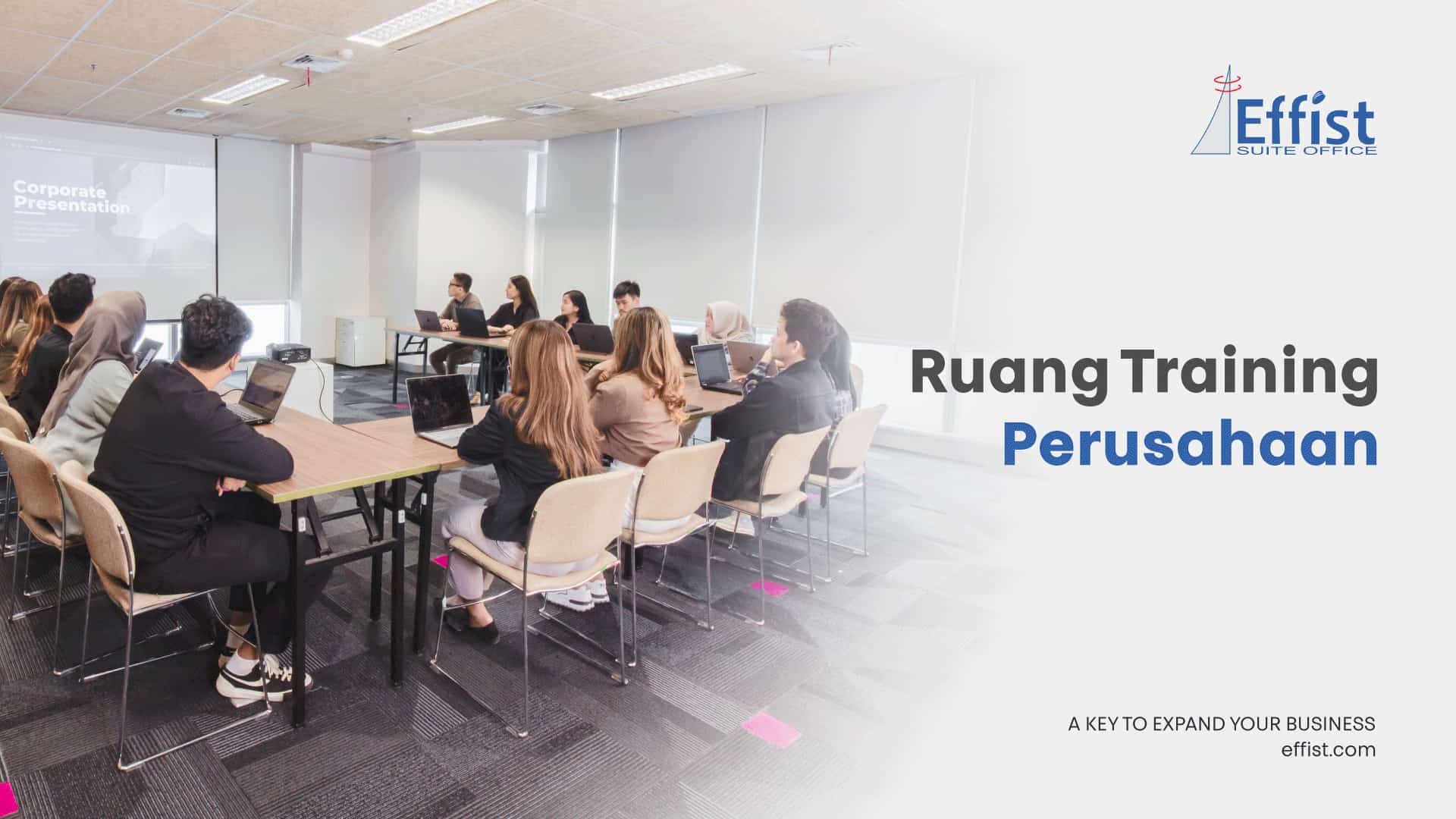
Panduan Memilih Ruang Training Perusahaan Sesuai Kebutuhan Bisnis
Tren industri dan kebutuhan pelanggan akan terus berubah seiring berjalannya waktu. Perusahaan dituntut untuk selalu beradaptasi agar mampu bersaing dengan para kompetitor. Salah satu caranya adalah melalui program training karyawan. Training kerja merupakan program terstruktur yang dirancang untuk meningkatkan keterampilan dan pengetahuan serta membekali karyawan dengan kompetensi yang relevan dengan kebutuhan bisnis terkini. Namun, keberhasilan training kerja tidak hanya bergantung pada materi dan instruktur pengajar. Pemilihan ruang training perusahaan yang tepat juga sangat penting untuk pengalaman belajar yang lebih berkesan.
Artikel ini akan membahas lebih lanjut tentang pentingnya pemilihan ruang training terhadap keberhasilan sesi pelatihan Anda, serta memberikan rekomendasi sewa ruang training sebagai bahan pertimbangan.
Pentingnya Memilih Ruang Training Perusahaan yang Tepat
Ruang training perusahaan merupakan sarana penting untuk memfasilitasi proses pembelajaran yang efektif. Akan tetapi, tidak semua perusahaan memiliki ruang yang memadai untuk mengadakan pelatihan bagi karyawan. Opsi sewa ruang training menjadi alternatif bagi perusahaan yang membutuhkan ruangan siap pakai untuk melaksanakan pelatihan karyawan.
Berikut adalah beberapa alasan pentingnya memilih ruang training perusahaan yang tepat:
Meningkatkan Fokus dan Konsentrasi Peserta
Pelatihan karyawan biasanya diadakan di ruangan khusus seperti ruang meeting dengan fitur kedap suara. Hal ini sangat penting untuk menjauhkan pelatihan karyawan dari kebisingan di ruang kantor, seperti dering telepon hingga obrolan rekan kerja. Ruangan training perusahaan yang kondusif dapat meningkatkan fokus dan konsentrasi selama proses pelatihan. Peserta pelatihan dapat lebih memahami materi yang sedang disampaikan, sehingga tujuan training dapat tercapai dengan lebih optimal.
Mendukung Kelancaran Kegiatan Pelatihan
Fasilitas meeting room seperti proyektor, layar presentasi, sound system, papan tulis, hingga akses internet berkecepatan tinggi dibutuhkan untuk menunjang penyampaian materi pelatihan. Sewa ruang training perusahaan umumnya sudah dilengkapi dengan fasilitas yang memadai untuk menjalankan pelatihan yang sukses. Perusahaan tidak perlu menghabiskan waktu dan biaya untuk membeli serta memasang perlengkapan training yang dibutuhkan. Selain itu, lokasi ruang pelatihan juga harus strategis dan mudah diakses melalui berbagai moda transportasi. Hal ini akan memudahkan peserta untuk hadir tepat waktu.
Mendukung Pembelajaran yang Interaktif
Tata ruang training perusahaan yang kurang tepat dapat menghambat efektivitas pembelajaran, bahkan membuat peserta mudah bosan dan menjadi pasif selama pelatihan. Beberapa layanan sewa ruangan pelatihan memiliki tata ruang yang dapat diatur secara fleksibel. Perusahaan dapat melaksanakan pelatihan dengan berbagai metode, mulai dari presentasi, diskusi kelompok, workshop, hingga simulasi interaktif. Tata ruang training yang tepat akan mendorong partisipasi dan kolaborasi yang lebih aktif.
Meningkatkan Kenyamanan Peserta Pelatihan
Bayangkan pelatihan karyawan dilaksanakan di ruangan yang sempit dengan kursi yang keras, pencahayaan yang redup, dan sirkulasi udara yang buruk. Mengingat pelatihan dapat berlangsung berjam-jam, ruangan pelatihan dengan kondisi seperti ini hanya akan menghambat fokus selama training. Di sinilah pentingnya ruang training perusahaan dengan kursi ergonomis serta suhu dan sirkulasi ruangan yang baik, sehingga peserta merasa nyaman dan produktif selama pelatihan.
Apa Saja Fasilitas yang Tersedia di Ruang Training?
Ruang training perusahaan yang tepat tidak hanya berfokus pada kapasitas, tetapi juga kelengkapan fasilitas yang dimiliki. Berikut adalah beberapa contoh fasilitas yang perlu tersedia di ruang training:
- Meja dan Kursi yang Nyaman: Selama training kerja, peserta akan membutuhkan tempat untuk meletakkan laptop atau alat tulis yang mereka bawa. Di sinilah pentingnya fasilitas meja dan kursi ergonomis untuk memaksimalkan kenyamanan selama pelatihan berdurasi berjam-jam. Fasilitas ergonomis juga berfungsi untuk mengurangi rasa kantuk dan kelelahan selama training.
- Sistem Audiovisual: Perlengkapan audiovisual mencakup proyektor, layar presentasi, speaker, hingga mikrofon. Sistem audiovisual yang memadai membantu penyampaian materi pelatihan, seperti presentasi, video, dan bahan visual lainnya, menjadi lebih efektif.
- Jaringan Internet Berkecepatan Tinggi: Jaringan internet yang stabil dan berkecepatan tinggi diperlukan untuk mendukung berbagai kebutuhan pelatihan. Contohnya adalah akses presentasi secara online, akses ke Learning Management System (LMS), hingga praktik langsung menggunakan aplikasi atau software secara online.
- Teknologi Video Conference: Video conference adalah teknologi yang memungkinkan dua pihak atau lebih untuk melakukan pertemuan secara virtual dan real-time menggunakan video dan audio melalui jaringan internet. Fasilitas seperti kamera, mikrofon, dan monitor yang terintegrasi dengan platform video conference dapat mendukung pelatihan hybrid atau virtual, dengan instruktur maupun peserta dari lokasi lain.
- Papan dan Alat Tulis: Fasilitas papan dan alat tulis menjadi media penting untuk menjelaskan materi, membuat ilustrasi, hingga mendorong peserta untuk berdiskusi lebih aktif. Walau pelatihan telah didukung oleh perlengkapan digital, papan tulis tetap efektif untuk memperjelas materi pelatihan secara lebih interaktif dan menarik.
Kriteria Ruang Training Perusahaan yang Ideal
Saat mencari tempat training perusahaan untuk disewa, terdapat beberapa kriteria penting sebagai bahan pertimbangan:
Lokasi Strategis
Jika Anda akan mengadakan pelatihan di luar lokasi perusahaan, pilihlah ruang training di lokasi yang strategis dan mudah dijangkau. Hal ini termasuk kemudahan akses dari transportasi umum hingga area parkir bagi peserta yang menggunakan kendaraan pribadi. Lokasi ruang pelatihan yang strategis mendukung peserta untuk hadir tepat waktu dan tidak merasa lelah akibat tempat training yang sulit dicapai. Peserta dapat menjaga konsentrasi mereka tetap optimal selama menjalani training.
Fasilitas Lengkap dan Memadai
Fasilitas ruang training yang lengkap dan memadai sangat penting untuk menunjang efektivitas pembelajaran selama training. Pastikan ruang training pilihan Anda dilengkapi dengan proyektor atau layar presentasi, sistem audio yang jernih, koneksi internet berkecepatan tinggi, papan tulis, serta meja dan kursi yang nyaman. Fasilitas yang lengkap dan canggih mendukung penyampaian materi yang lebih efektif, interaktif, serta minim gangguan teknis yang berpotensi membuang waktu.
Fleksibilitas Ruang Training
Ruang training yang ideal setidaknya dapat mengatur layout ruangan secara fleksibel untuk memfasilitasi berbagai jenis pelatihan. Misalnya, layout ruangan berbentuk classroom mengharuskan peserta untuk fokus ke depan ruangan layaknya ruang kelas. Jenis layout ini cocok untuk seminar edukasi atau sertifikasi. Contoh lainnya adalah layout ruangan berbentuk huruf U yang memungkinkan setiap peserta melihat instruktur maupun peserta lainnya. Bagian tengah dibiarkan kosong untuk memudahkan presentasi. Layout ini cocok jika Anda ingin mendorong diskusi selama pelatihan.
Suasana Kondusif dan Nyaman untuk Training
Suasana ruang training yang kondusif dan nyaman berperan penting dalam menjaga fokus serta meningkatkan keberhasilan pembelajaran. Ruang training yang ideal perlu memiliki pencahayaan yang baik, sirkulasi udara yang optimal, suhu udara yang sejuk, serta tingkat kebisingan yang rendah. Dengan demikian, peserta dapat mengikuti pelatihan tanpa gangguan. Layout ruangan yang rapi serta desain interior modern turut menciptakan lingkungan belajar yang produktif, sehingga peserta dapat menyerap materi pelatihan dengan lebih baik.
Rekomendasi Sewa Ruang Training Perusahaan di Jakarta Selatan
Jakarta Selatan memiliki banyak pilihan ruangan pelatihan perusahaan yang cocok untuk berbagai kebutuhan, mulai dari training internal hingga workshop. Berikut adalah beberapa rekomendasi sewa tempat training di Jakarta Selatan yang bisa Anda pertimbangkan:
Effist Suite Office EightyEight@Kasablanka
Rekomendasi sewa ruangan pelatihan yang pertama adalah layanan meeting room dari Effist Suite Office di gedung EightyEight@Kasablanka. Layanan meeting room dari Effist Suite Office menyediakan berbagai ruang meeting dengan berbagai ukuran, mulai dari ruangan berukuran kecil hingga besar.
Ruang meeting Effist dapat memfasilitasi pelatihan tim berskala kecil hingga pelatihan berskala besar dengan jumlah peserta yang banyak. Effist Suite Office berlokasi strategis di kawasan bisnis Jakarta Selatan seperti Kuningan dan Tebet. Tidak hanya itu, layanan meeting room Effist menawarkan akses mudah ke transportasi umum, jalan besar, pusat perbelanjaan, apartemen, hotel, serta fasilitas lainnya.
Layanan ruang meeting Effist Suite Office turut didukung oleh fasilitas lengkap dan modern, mulai dari LCD proyektor, sound system, akses internet berkecepatan tinggi, meja dan kursi yang nyaman, layout fleksibel, hingga perlengkapan video conference untuk kebutuhan pelatihan secara online. Kenyamanan dan profesionalisme yang ditawarkan ruang meeting Effist Suite Office EightyEight@Kasablanka tidak hanya mendukung kelancaran pelatihan Anda, tetapi juga menciptakan kesan positif di mata para peserta pelatihan.
Effist Suite Office Gandaria 8 Tower
Rekomendasi sewa training room berikutnya adalah Effist Suite Office di Gedung Gandaria 8 Tower. Layanan meeting room Effist Suite Office ini tersedia dalam berbagai ukuran untuk memfasilitasi berbagai jenis pelatihan. Baik itu sesi training dengan kelompok kecil maupun pelatihan berskala besar, Effist Suite Office mampu memfasilitasi semuanya secara optimal.
Effist Suite Office Gandaria 8 Tower memastikan sesi training Anda berjalan lancar dengan dukungan fasilitas meeting premium, mulai dari LCD proyektor, sistem audiovisual berkualitas, koneksi internet cepat, hingga kursi dan meja rapat yang ergonomis. Dilengkapi dengan tata ruang fleksibel dan perangkat video conference, ruang meeting ini mampu mengakomodasi berbagai kebutuhan pelatihan Anda.
Mulai Training Lebih Produktif di Layanan Meeting Room dengan Fasilitas Lengkap dari Effist
Memilih ruang training perusahaan yang tepat dapat menjadi langkah strategis untuk mewujudkan sesi pelatihan yang efektif dan nyaman bagi seluruh peserta. Effist Suite Office menyediakan meeting room modern yang dirancang untuk memfasilitasi berbagai kebutuhan training, seminar, maupun workshop.
Setiap ruang meeting kami dilengkapi dengan berbagai fasilitas modern untuk mendukung kelancaran sesi pelatihan Anda. Fasilitas kami mencakup internet berkecepatan tinggi, sistem video conferencing, perangkat audiovisual canggih, LCD projector, layout ruangan yang fleksibel, serta dukungan tim profesional. Kami memastikan setiap sesi pelatihan Anda berjalan dengan optimal dan tanpa kendala.
Effist Suite Office juga menyediakan berbagai paket ruang meeting yang bisa Anda pilih sesuai kebutuhan training Anda. Setiap paket memiliki benefit seperti coffee break, makan siang, air mineral, alat tulis, hingga perlengkapan presentasi yang siap digunakan. Effist Suite Office berlokasi strategis di pusat bisnis Jakarta Selatan, yaitu EightyEight@Kasablanka dan Gandaria 8 Tower.
Dengan pilihan kapasitas ruangan yang fleksibel serta suasana kerja profesional, Effist siap membantu Anda menyelenggarakan pelatihan yang berdampak nyata.
Hubungi kami melalui email contact@effist.com untuk informasi lebih lanjut seputar layanan meeting room kami atau mulai konsultasi seputar kebutuhan ruang training Anda.
Editor: Trie Ayu Feminin & Irnadia Fardila

13 July 2026
Sewa Meeting Room Harian Jakarta Selatan untuk Pertemuan Bisnis
Opsi sewa meeting room harian menjadi pilihan populer bagi banyak bisnis, terutama bisnis yang beroperasi secara remote, freelancer, digital nomad, atau bisnis yang tidak memiliki ruang meeting memadai. Meeting room merupakan wadah krusial untuk memfasilitasi pertemuan dengan tim, klien, maupun mitra bisnis. Maka dari itu, menyewa meeting room harian dengan fasilitas lengkap merupakan langkah penting untuk memastikan diskusi berjalan efektif dan mencapai tujuan yang diinginkan.
Artikel ini akan memandu Anda seputar tips menyewa meeting room harian di area Jakarta Selatan, termasuk rekomendasi meeting room terbaik untuk kebutuhan pertemuan bisnis Anda.
Apa Saja Fasilitas yang Biasanya Tersedia di Ruang Meeting Harian?
Saat memutuskan untuk sewa ruang meeting harian di Jakarta Selatan, terdapat beberapa fasilitas penting yang perlu tersedia di ruang meeting tersebut, yaitu:
Meja dan Kursi Ergonomis
Meja dan kursi ergonomis termasuk salah satu fasilitas ruang meeting yang dibutuhkan untuk menjaga kenyamanan selama rapat. Fasilitas yang ergonomis dirancang untuk memaksimalkan kenyamanan dan keamanan pengguna yang memakainya. Dengan meja dan kursi ergonomis, peserta rapat tidak mudah merasa pegal dan lelah selama meeting, terutama jika meeting yang dilaksanakan berlangsung lama. Fasilitas ini juga dapat meningkatkan fokus peserta rapat, sehingga diskusi meeting dapat berlangsung produktif.
Internet Berkecepatan Tinggi
Fasilitas meeting room lainnya yang tidak boleh dilupakan adalah koneksi internet berkecepatan tinggi dan stabil. Fasilitas ini menjadi salah satu kebutuhan utama di meeting room, terlebih jika materi presentasi Anda perlu diakses secara online atau jika peserta rapat perlu mencari informasi di internet. Selain itu, koneksi internet yang cepat juga diperlukan untuk mendukung komunikasi secara online, mengirim dokumen secara online ke peserta lain, hingga mengadakan meeting secara hybrid dengan peserta rapat lain di lokasi lain.
Sistem Audiovisual
Perangkat audiovisual di ruang meeting mencakup proyektor, layar, serta sound system seperti mikrofon dan speaker. Perangkat ini dibutuhkan di meeting room untuk menayangkan presentasi bisnis, video, maupun bahan visual lainnya yang diperlukan selama meeting. Mikrofon dan speaker juga bermanfaat untuk menyampaikan agenda rapat secara jelas ke seluruh peserta, terlebih jika Anda mengadakan seminar, workshop, atau meeting yang melibatkan banyak peserta.
Sistem Video Conference
Video conference adalah perangkat teknologi yang memungkinkan orang-orang di lokasi yang berbeda berkomunikasi melalui jaringan internet. Jika Anda akan mengadakan meeting secara hybrid, kehadiran sistem video conference sangat diperlukan. Fasilitas seperti kamera, mikrofon, dan monitor yang terintegrasi dengan platform video conference seperti Zoom dan Google Meet dapat memfasilitasi meeting yang lebih efektif dan melibatkan semua peserta. Dengan demikian, peserta yang menghadiri rapat secara online dari lokasi berbeda tetap dapat memahami agenda rapat yang disampaikan.
Papan dan Alat Tulis
Papan tulis beserta alat tulis seperti spidol dan penghapus menjadi media untuk menuangkan ide hingga menjelaskan materi rapat secara lebih interaktif. Teknologi papan tulis interaktif juga dapat memudahkan pembicara dalam menjelaskan atau mengedit materi secara langsung dari tayangan presentasi yang ditampilkan. Papan tulis interaktif juga dapat beroperasi dalam hybrid atau virtual meeting, sehingga peserta yang mengikuti rapat secara online tetap dapat melihat visualisasi ide yang digambarkan.
Baca Juga: Panduan Sewa Ruang Meeting Jakarta Selatan untuk Bisnis
Apa Keuntungan Menyewa Meeting Room Harian?
Adapun keuntungan dari sewa ruang meeting harian, khususnya di area strategis seperti Jakarta Selatan yaitu:
Lebih Hemat Biaya
Salah satu keuntungan menyewa ruang meeting adalah lebih hemat biaya, terutama jika Anda hanya menggunakannya untuk kebutuhan sehari-hari. Jika bisnis Anda beroperasi secara remote atau hybrid dan tidak sering menggunakan meeting room fisik, sewa meeting room harian akan lebih ekonomis dibandingkan dengan memiliki ruang meeting sendiri. Anda hanya membayar saat ruang meeting digunakan, sehingga tidak perlu mengeluarkan biaya lain untuk perawatan atau pembelian perlengkapan rapat.
Fleksibilitas Sesuai Kebutuhan
Layanan sewa meeting room harian seperti Effist Suite Office menawarkan fleksibilitas tinggi dalam menentukan durasi dan kapasitas ruangan sesuai kebutuhan. Anda dapat memilih ruang meeting yang sesuai dengan jumlah peserta dan jenis kegiatan, baik untuk rapat internal, presentasi, pertemuan dengan klien, maupun event bisnis.
Tampil Lebih Profesional
Ruang meeting dapat berkontribusi dalam membentuk citra bisnis yang profesional dan tepercaya. Jika Anda akan menemui calon klien, mitra bisnis, atau investor, kesan pertama sangat penting bagi hubungan bisnis jangka panjang. Dengan menyewa ruang meeting modern untuk 1 hari, Anda dapat memberikan kesan profesional kepada klien, mitra bisnis, maupun investor. Hal ini juga menunjukkan komitmen Anda untuk berdiskusi secara produktif mengenai kerja sama bisnis yang ingin dilakukan.
Fasilitas Lengkap dan Siap Digunakan
Penyedia layanan meeting room seperti Effist Suite Office telah melengkapi ruang meeting dengan fasilitas modern yang memadai. Hal ini termasuk koneksi internet berkecepatan tinggi, meja dan kursi yang nyaman, perangkat audiovisual, sistem video conference, hingga layanan resepsionis untuk menyambut peserta rapat yang datang. Dengan fasilitas yang lengkap dan siap digunakan, Anda tidak perlu lagi repot menyiapkan peralatan tambahan.
Pilihan Lokasi Strategis untuk Sewa Meeting Room Harian Jakarta Selatan
Memilih lokasi yang tepat sama pentingnya dengan memilih layanan sewa meeting room. Berikut beberapa area strategis di Jakarta Selatan yang menawarkan akses mudah, lingkungan profesional, dan mendukung kelancaran meeting Anda:
Tebet
Tebet menjadi salah satu kawasan favorit untuk sewa ruang meeting harian di Jakarta Selatan. Hal ini disebabkan oleh lokasinya yang strategis dan mudah dijangkau dengan berbagai moda transportasi, mulai dari transportasi umum (stasiun KRL, LRT, MRT, TransJakarta) hingga transportasi pribadi melalui jalan utama. Didukung oleh akses mudah ke berbagai fasilitas seperti restoran, kafe, pusat perbelanjaan, hingga hotel, Tebet cocok untuk mengadakan berbagai pertemuan bisnis tanpa harus berpindah lokasi, sehingga dapat memenuhi kebutuhan para peserta.
Gandaria City Superblock
Rekomendasi lokasi berikutnya untuk sewa ruang rapat di Jakarta Selatan adalah Gandaria City Superblock. Lokasi ini merupakan kawasan superblok modern yang mengintegrasikan pusat perbelanjaan, kawasan perkantoran, dan hunian modern di satu area. Gandaria City Superblock berlokasi dekat dengan kawasan premium Jakarta Selatan lainnya, seperti Kebayoran Lama dan Pondok Indah. Didukung oleh akses transportasi umum yang mudah, jalan utama, serta fasilitas pendukung lainnya. Sewa meeting room harian di lokasi ini menjadi opsi praktis bagi perusahaan maupun tenaga profesional.
Baca Juga: Sewa Meeting Room Per Jam di Jakarta Selatan, Mulai dari Rp200ribu!
Rekomendasi Layanan Meeting Room Harian untuk Disewa
Bagi Anda yang mencari layanan meeting room harian yang terpercaya untuk disewa, berikut adalah beberapa rekomendasi sebagai pertimbangan:
Lotus Room, Effist Suite Office EightyEight@Kasablanka
Rekomendasi meeting room pertama untuk disewa di Jakarta Selatan adalah Lotus Room dari Effist Suite Office di gedung EightyEight@Kasablanka. Ruang meeting ini dirancang untuk memaksimalkan kenyamanan peserta rapat dengan sofa kulit yang nyaman, sehingga pertemuan bisnis dapat berjalan produktif dan tanpa hambatan. Ruang meeting ini berlokasi strategis di jantung kawasan Jakarta Selatan dan mudah diakses melalui transportasi umum maupun kendaraan pribadi. Dengan kapasitas hingga 12 orang serta desain ruang meeting yang mewah, Lotus Room cocok untuk Anda yang ingin mengadakan meeting formal atau resmi.
Edelweiss Room, Effist Suite Office EightyEight@Kasablanka
Rekomendasi ruang meeting untuk disewa selanjutnya adalah Edelweiss Room dari Effist Suite Office di gedung EightyEight@Kasablanka. Sebagai salah satu ruang serbaguna terbesar di Kota Kasablanka, Edelweiss Room memiliki luas ruangan yang lebih besar dengan kapasitas hingga 40 orang. Didukung oleh perlengkapan rapat yang canggih serta layout ruang meeting yang fleksibel, Anda dapat menggunakan Edelweiss Room untuk memfasilitasi pertemuan berskala besar atau event bisnis dengan banyak peserta.
Ruby Room, Effist Suite Office Gandaria 8 Tower
Ruby Room dari Effist Suite Office di Gedung Gandaria 8 Tower menjadi rekomendasi meeting room berikutnya. Ruang meeting ini dapat memfasilitasi 12 orang peserta rapat, lengkap dengan peralatan rapat modern dan canggih. Peralatan ini mencakup papan tulis, smart TV, dan proyektor untuk menayangkan presentasi bisnis. Lokasinya yang strategis di Gandaria City Superblock membuat Ruby Room menjadi opsi terbaik bagi Anda yang mencari ruang meeting profesional.
Topaz Room, Effist Suite Office Gandaria 8 Tower
Topaz Room dari Effist Suite Office di gedung Gandaria 8 Tower adalah rekomendasi ruang meeting untuk disewa selanjutnya. Ruang meeting ini memiliki kapasitas hingga 25 orang, sehingga cocok untuk mengadakan pertemuan bisnis yang melibatkan banyak peserta. Desain Topaz Room yang cozy dan vintage akan membuat acara Anda lebih menarik dan lebih menyenangkan. Bagi Anda yang ingin mengadakan seminar atau workshop di kawasan Gandaria City, Topaz Room dapat menjadi opsi terbaik Anda.
Cara Menyewa Layanan Meeting Room Harian di Effist
Tertarik menyewa layanan meeting room harian di Effist Suite Office? Ikuti langkah-langkah praktis ini untuk mulai menyewa ruang meeting harian Anda:
- Temukan Ruangan Sesuai Kebutuhan: Effist Suite Office menyediakan berbagai jenis ruang meeting yang berlokasi di EightyEight@Kasablanka dan Gandaria 8 Tower. Sesuaikan dengan jumlah peserta dan jenis rapat yang ingin Anda lakukan.
- Tentukan Tanggal dan Durasi Penyewaan: Pilih tanggal serta durasi penggunaan meeting room sesuai dengan jadwal acara. Sebaiknya lakukan pemesanan lebih awal untuk memastikan ketersediaan ruangan yang Anda inginkan.
- Hubungi Tim Effist untuk Reservasi Ruangan: Hubungi tim Effist Suite Office melalui email atau telepon untuk mulai melakukan reservasi ruang meeting Anda. Sampaikan kebutuhan meeting Anda secara rinci agar tim dapat membantu proses reservasi.
- Lakukan Pembayaran: Setelah reservasi dikonfirmasi, lakukan pembayaran sesuai dengan ketentuan yang berlaku. Anda akan menerima konfirmasi reservasi setelah pembayaran berhasil diverifikasi.
Sewa Meeting Room Harian Lebih Praktis dan Mudah dengan Layanan Meeting Room dari Effist
Menemukan ruang meeting untuk berbagai kebutuhan pertemuan bisnis kini tidak lagi sulit. Sebagai penyedia layanan office space terkemuka di Jakarta Selatan, Effist Suite Office hadir dengan layanan meeting room dalam berbagai ukuran untuk memenuhi berbagai kebutuhan bisnis Anda, baik itu meeting internal hingga presentasi penting bersama klien atau mitra bisnis
Layanan meeting room Effist Suite Office didukung fasilitas modern, seperti internet berkecepatan tinggi, sistem video conferencing, LCD projector, serta dukungan tim profesional. Dengan fasilitas lengkap dan canggih, kami memastikan setiap sesi meeting Anda dapat berlangsung optimal dan tanpa kendala.
Effist juga menyediakan berbagai paket meeting dengan benefit seperti coffee break, makan siang, air mineral, alat tulis, hingga perlengkapan presentasi yang siap digunakan. Dengan layanan lengkap dan suasana profesional, Effist siap menjadi solusi meeting room untuk menjalankan pertemuan bisnis yang nyaman dan efisien.
Hubungi kami melalui email contact@effist.com untuk informasi lebih lanjut seputar layanan meeting room kami atau mulai konsultasi terkait kebutuhan meeting room Anda.
Editor: Trie Ayu Feminin & Irnadia Fardila
03 March 2026
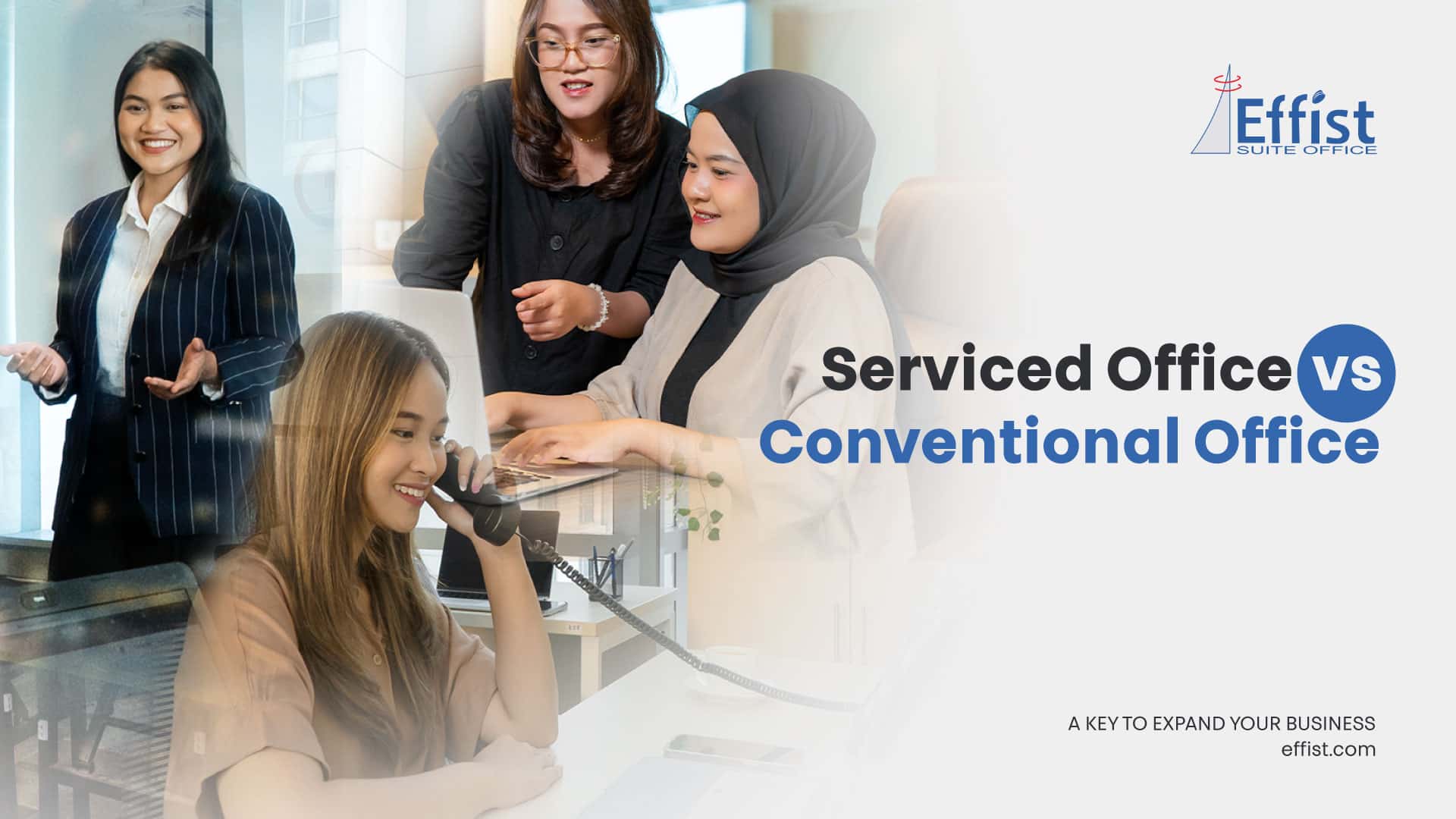
Serviced Office VS Conventional Office, Which One is Better?
A comfortable, well-equipped office space is a crucial factor in supporting productive business operations. Your office space is your operational base where your employees work, deliver value, and connect with customers. It also helps build your reputation and credibility. There are two popular options for office space: serviced offices vs. conventional offices. For business owners looking for the right office space to support daily operations, understanding the differences between these options is important. Let’s explore the office space comparison between serviced office vs conventional office to help you discover the better option for your business needs.
What is a Serviced Office?
Serviced office refers to a fully-furnished, ready-to-use office space managed by a third-party provider. It offers short-term rentals instead of long-term commitment, which is ideal for businesses seeking hassle-free setups with complete facilities in all-inclusive fees. These short-term leases allow scaling up or down as needs change, making them perfect for accommodating growth phases. The facilities in the service office include fully furnished workstations, high-speed internet, reception and cleaning services, on-site support, access to meeting rooms, etc. You don't have to worry about purchasing desks, chairs, shelves, or other furnishings, or about the cost of relocating furniture when you move in.
Many companies prefer serviced offices to buying office space, as they offer a professional environment in flexible office space without the high upfront costs associated with traditional office leases. The office provider handles all the maintenance, repair, and cleaning, so you can focus on running and growing your business. Many serviced offices are located in business districts to boost professional image, which is essential for startups and established companies.
What is a Conventional Office?
A conventional office is a traditional physical workspace that a company leases or owns exclusively for its operations. These offices typically involve long-term leases (often in years) directly from landlords or building owners, priced per square foot. The companies as tenants handle setup costs, including furniture, utilities, maintenance, and other services. It emphasizes a hierarchical, in-person work structure, offering high control over the environment but requiring significant upfront investment.
While it may not be as flexible as a serviced office, a conventional office is also a great option for companies seeking full control over customization and high privacy. With conventional offices, you have complete control over the office layout and interior design to reflect your company's identity and culture better. However, with the high costs upfront, scaling up or downsizing can be very expensive and complicated due to lease commitments and fixed overhead expenses. This makes a conventional office suitable for established companies with predictable growth and long-term operational plans.
What are the Main Differences Between Serviced Offices VS Conventional Offices?
Before deciding which workspace model best supports your business operations, it is important to understand how each office space operates in practice. Both office spaces provide a professional environment, but they differ in terms of cost structure, flexibility, management responsibilities, and overall convenience. These differences can impact your operational efficiency, scalability, and long-term financial planning. To help you evaluate which solution better fits your business needs, the following table highlights the main differences between serviced offices and conventional offices.
| Aspect | Serviced Office | Conventional Office |
| Lease Terms | Flexible lease terms (monthly, short-term, or customizable duration) | Long-term lease (2-5 years or more) |
| Setup | Minimal upfront cost (ready-to-use office space with furniture included) | High upfront cost (deposit, renovation, furniture, utilities setup) |
| Services | All-inclusive, handled by a third-party provider (cleaning, reception, maintenance, etc.) | Separate contracts and payments for each service. Additional services may cost extra |
| Operational Costs | All-inclusive pricing (utilities, cleaning, maintenance included) | Separate bills for utilities, maintenance, cleaning, and security |
| Facilities | Equipped with facilities such as internet, meeting rooms, workstations, etc. | Tenants arrange and provide facilities by themself, including costs for equipment and maintenance |
| Customization | It may be limited as the workspace comes with standard furnishings | High flexibility for full interior design, branding, and other modifications |
| Privacy and Security | May have less privacy due to sharing facilities with other tenants | Has higher privacy and security as tenants don't need to share facilities with others |
| Scalability | Easy expansion/contraction in the same space | Often requires a new lease or move out |
| Best For | Startups and growing businesses | Established businesses with stable long-term plans |
Read More: Best Serviced Office Recommendations in South Jakarta 2026
Considerations in Selecting the Right Office for Your Business
Every business has unique needs, and the ideal office space should accommodate them seamlessly. Here are several considerations in choosing the right office space for your business:
Location
The first consideration is the location of your office space. A strategic location improves accessibility for employees, clients, and business partners. Office spaces located in central business districts or near public transportation can reduce commute times and enhance convenience. Some locations, especially in prestigious areas, can strengthen your brand image and credibility. However, strategic location often comes with high costs, so choose carefully.
Budget
Another consideration is your budget for office space. Beyond monthly rent, consider additional expenses such as utilities, maintenance, and parking fees. For example, startups or growing businesses with limited budgets may find serviced offices sufficient to support daily operations. Always calculate the total cost of occupancy before deciding between a serviced office and a conventional office.
Office Size
The office size should match your current team while allowing for future growth. An office that is too small can hinder productivity and comfort, while an overly large space can lead to unnecessary expenses. Evaluate the number of employees, required workstations, meeting rooms, storage areas, and other spaces. Planning for scalability is essential, especially if your business is in the growth phase. A serviced office often offers flexibility to scale up or down as business needs change.
Amenities and Facilities
Modern businesses need more than just desks and chairs. Consider the amenities and facilities included, such as high-speed internet, meeting rooms, reception and cleaning services, and security systems. If you consider a conventional office, make sure the office space can accommodate your customized amenities and facilities.
Image and Reputation
Your office environment reflects your image and brand reputation. A well-maintained office in a prestigious area can enhance your customer trust and strengthen your professional image. Serviced offices often provide premium interiors and professional reception services that immediately elevate business credibility. Conventional offices offer full customization, but building a strong professional image may require additional investment in renovations and branding.
Read More: Effist vs Another Office Provider: Which One The Best to Support Your Business Growth?
Ready to Choose the Smarter Option? Discover Serviced Office Solutions at Effist Suite Office
When comparing serviced office vs conventional office, the decision comes down to flexibility, convenience, and long-term scalability. A serviced office offers businesses the convenience of a fully prepared environment, allowing teams to focus on performance and expansion from day one. Instead of spending time setting up furniture, utilities, and daily operations, you can move in and start working immediately.
At Effist Suite Office, we provide serviced office solutions with fully equipped office spaces, including ergonomic workstations, high-speed internet, executive office equipment, meeting rooms in various sizes, a business lounge, a pantry, and professional secretarial and cleaning services. We are located in central business hubs in Jakarta Selatan: Office 88 Kota Kasablanka and Gandaria 8 Office Tower.
Our office spaces are designed to support companies that plan to scale and operate efficiently. As your business grows, you can easily upgrade your space without operational disruption. Simply move in and operate while we handle your office needs. Contact us now through email contact@effist.com or visit "Book Tour" to learn more about our serviced office solutions.
Written by
Muftia Parasati, S.S., Content Writer at Phincon, specializing in research-based and SEO-optimized content on business growth, workplace trends, and digital productivity topics. | Muftia LinkedIn Profile
Reviewed by
Erin Supriyanti, Center Manager at Effist, with over 10 years of experience in workspace operations, team management, and business support services. | Erin LinkedIn Profile
Editor: Trie Ayu Feminin & Irnadia Fardila
Editor: Trie Ayu Feminin & Irnadia Fardila
14 September 2026
Top 6 Business Districts in South Jakarta Every Business Must Know
Choosing the right location for your business is critical to drive operational efficiency and growth. As one of Jakarta's most dynamic areas, South Jakarta is known to have many major business districts. Each business district in South Jakarta offers plenty of unique advantages, from convenient transportation networks to access to a skilled talent pool.
Setting up an office in a strategic district like South Jakarta offers valuable opportunities for networking and growth. This article guides you to South Jakarta's business districts and why they are worth considering for your business's next location.
What is a Business District?
A business district refers to an area of a city or town with a high concentration of many businesses and commercial activities, like offices, banks, shops, government offices, restaurants, hotels, etc. It is located in strategic areas and serves as important economic centers for a city.
Business districts are often equipped with modern infrastructure, convenient transportation options, and a wide range of services that enhance the overall working experience. Establishing a company in a strategic location like a business district contributes to building credibility and a professional image. This makes business districts highly desirable locations for startups, growing enterprises, and established corporations alike.
Why is South Jakarta a Strategic Location for Business?
South Jakarta can be considered one of the most popular business districts in Indonesia. This is due to a number of reasons, including:
Major Business Hubs of Jakarta
South Jakarta is home to several prominent business districts, including Sudirman, Kuningan, and Gatot Subroto. These areas accommodate corporate offices, financial institutions, multinational companies, technology firms, and professional service providers. Close proximity to these business hubs allows companies to operate and reach important clients, business partners, investors, and other key industry players. This also makes business meetings and networking more convenient, especially for companies that frequently interact with their stakeholders.
Convenient Transport Links
Another reason why South Jakarta is a strategic business location is its comparatively well-developed transportation network. South Jakarta is connected by various major roads and highways and is served by plenty of public transportation options. This includes MRT Jakarta, TransJakarta, LRT Jakarta, trains, and other modes of transport. Easy transportation access helps employees and clients to reach the office. For companies, this can support employee mobility and improve business operations' efficiency.
Access to a High-Quality Talent Pool
The location of your company can influence how you can get the best talent to support business growth. Many excellent talents consider the company's location when accepting a job offer, especially its accessibility and proximity to nearby amenities such as public transportation, dining options, and lifestyle facilities. South Jakarta's strategic location can be a strong point for companies to attract high-quality candidates. Its connectivity also allows employees from other parts of Jakarta and surrounding areas to commute to the district.
Boost Professional Business Image
Where your company is located shapes how people perceive your brand. Many customers consider checking the company's location before making further steps. South Jakarta is home to many major business districts well-known for their professional environment. Doing business in South Jakarta can strengthen your company's reputation significantly. Not only that, a strategically located office can make it more convenient to meet clients and business partners, allowing you to build long-term strategic partnerships.
Suitable for Different Business Needs
Being a strategic business district, South Jakarta provides more than just traditional office spaces. From conventional corporate offices to serviced offices, virtual offices, coworking spaces, and meeting rooms to rent, South Jakarta offers various workspace options to suit different business needs. Whether you're a startup, multinational company, or remote-based business, this flexibility allows you to choose a location based on your operational requirements, team size, and budget, while still enjoying access to South Jakarta's strategic location.
6 Business Districts in South Jakarta That Worth Setting Up In
Choosing the right location can impact your business's accessibility, visibility, and growth potential. South Jakarta offers several business districts with excellent infrastructure and strategic advantages you should consider:
Tebet
The first business area recommendation in South Jakarta is Tebet. This area has developed into an affordable business hub for companies of all sizes. Tebet features proper road infrastructure and access to integrated public transportation, such as trains, MRT, and TransJakarta. You can also spot various supporting amenities in Tebet, such as shopping centers, restaurants, apartments, and hotels to support work-life balance. Tebet is an ideal location for those looking to establish a business in a strategic area of South Jakarta with budget-friendly office options, such as serviced office, virtual office, or coworking space.
Gandaria City Superblock
Your next business district recommendation in South Jakarta is Gandaria City Superblock. Being a "superblock", this district integrates a shopping center, office spaces, and a residential area within one single area. It is located near other premium South Jakarta business centers, such as Kebayoran Lama and Pondok Indah. Gandaria City Superblock offers a premium and exclusive environment with direct access to various amenities, making it an attractive option to establish a business. You can not only enhance your professional image but also improve work-life balance.
Sudirman Central Business District (SCBD)
Sudirman Central Business District (SCBD) can be considered one of the most prominent business areas in South Jakarta. Situated along Jalan Jenderal Sudirman, SCBD is a planned and gated superblock that integrates office towers, international hotels, shopping centers, and luxurious apartments. It also provides convenient access to major roads and public transportation, including MRT and TransJakarta. SCBD's strategic location alongside its polished and corporate environment makes it a great option for companies seeking a prestigious location to boost business presence.
Kuningan
Kuningan business district in Jakarta is known as the international business district due to its high concentration of international corporations and foreign embassies. It is located in the Golden Triangle of Jakarta with easy access to nearby business hubs, such as Sudirman and Gatot Subroto. The area features a modern urban layout designed to support convenient business activities. Its professional atmosphere, combined with lush, green surroundings, makes Mega Kuningan a popular choice for many companies. Furthermore, the area's proximity to toll roads and public transportation networks facilitates relatively easy mobility for employees and visitors alike.
Thamrin
The Thamrin district is one of South Jakarta's most vital economic hubs due to its high accessibility and integrated transportation networks. Located near Sudirman, Thamrin is renowned for its array of premium office buildings and government offices, as well as amenities such as shopping malls and hotels. The area is served by the MRT and TransJakarta networks and is situated close to major shopping centers like Grand Indonesia and Plaza Indonesia. Its strategic location makes Thamrin a top choice for companies that prioritize ease of mobility and brand exposure.
Gatot Subroto
Gatot Subroto is a major business district in South Jakarta featuring numerous modern office buildings and comprehensive supporting facilities. It is highly popular among business owners due to its proximity to other major business hubs such as Thamrin, Senayan, and Slipi. The area is also easily accessible via toll roads and public transportation, making it a strong choice for companies looking for a strategic location at a more affordable price compared to areas like SCBD.
Make Your Business Stand Out in South Jakarta’s Top Business Districts with Effist Suite Office
Establishing your business in a strategic location like South Jakarta provides greater visibility, convenience, and access to Jakarta's thriving business ecosystem. However, establishing an office in a prime location doesn't have to be complicated or involve high upfront costs. As one of the top office space providers in South Jakarta, Effist Suite Office offers fully-equipped serviced offices designed to help your business get started quickly and efficiently.
Our office spaces are equipped with complete facilities, including an ergonomic workstation, high-speed internet, executive work equipment, meeting rooms of various sizes, a business lounge, pantry, and professional secretarial and cleaning services. Located at South Jakarta's prime business hubs, EightyEight@Kasablanka and Gandaria 8 Tower, Effist Suite Office makes it easy to establish your business presence in South Jakarta’s strategic districts. Simply move in, start operating, and let us handle your office space needs.
Contact us via email contact@effist.com for more information regarding our serviced office solutions.
Editor: Trie Ayu Feminin & Irnadia Fardila
08 September 2026
Fungsi Ruang Kantor Siap Pakai Sebagai Solusi Ruang Kerja Praktis
Banyak perusahaan mulai meninggalkan model ruang kantor tradisional yang mengharuskan mereka untuk menyewa dan membangun ruang kerja dari awal. Hal ini tidak hanya kurang fleksibel untuk memenuhi kebutuhan bisnis yang selalu berubah-ubah. Perusahaan juga dapat menghabiskan waktu dan biaya yang cukup besar untuk menata ruang kantor tradisional. Solusi ruang kantor siap pakai muncul sebagai solusi untuk perusahaan yang ingin beroperasi secara praktis tanpa perlu memusingkan pengadaan dan penataan furniture kantor.
Solusi ruang kantor siap pakai merupakan bagian dari layanan serviced office. Pada layanan ini, perusahaan dapat menyewa ruang kantor dengan fasilitas lengkap dengan kapasitas sesuai kebutuhan mereka. Artikel ini akan memandu Anda tentang ruang kantor siap pakai, termasuk cara kerjanya hingga rekomendasi layanan yang bisa Anda pertimbangkan.
Bagaimana Cara Kerja Ruang Kantor Siap Pakai?
Cara kerja ruang kantor siap pakai melibatkan penyedia layanan serviced office sebagai pengelola ruang kerja dan perusahaan atau tim yang menggunakan ruang kerja tersebut. Penyedia layanan serviced office menyewakan ruang kerja siap pakai yang sudah dilengkapi dengan fasilitas perkantoran memadai. Dengan demikian, perusahaan dapat langsung pindah dan menggunakan ruang kantor tersebut tanpa harus menata ulang dari awal.
Dalam prosesnya, perusahaan dapat menghubungi penyedia layanan serviced office untuk mendiskusikan kebutuhan ruang kantor mereka serta durasi penyewaan ruang kantor. Jika perusahaan merasa cocok dengan ruang kantor yang disewakan, perjanjian sewa dapat ditandatangani. Perusahaan pun dapat langsung menempati ruangan dan beroperasi. Aspek lainnya seperti pemeliharaan fasilitas dan kebersihan ruangan sudah dikelola oleh penyedia serviced office. Dengan demikian, perusahaan dapat lebih fokus pada operasional bisnis mereka.
Fasilitas yang Tersedia di Ruang Kantor Siap Pakai
Ketersediaan fasilitas kantor siap pakai diperlukan untuk menjalankan operasional bisnis yang efisien. Beberapa contoh fasilitas yang bisa Anda temukan di ruang kantor siap pakai adalah:
- Furniture Kantor Premium: Guna menunjang kenyamanan dan produktivitas kerja, ruang kerja siap pakai sudah dilengkapi furniture berkualitas. Hal ini termasuk meja dan kursi ergonomis, lemari penyimpanan, dan perlengkapan kantor lainnya. Furniture kantor berkualitas premium membantu menciptakan lingkungan kerja yang profesional dan efisien untuk karyawan.
- Jaringan Internet Berkecepatan Tinggi: Dunia kerja yang serba digital membuat jaringan internet berkecepatan tinggi menjadi fasilitas standar yang disediakan ruang kerja siap pakai. Koneksi internet yang stabil memudahkan komunikasi secara online, kolaborasi aktif antar karyawan dan tim, video conference, maupun aktivitas bisnis lainnya.
- Akses ke Meeting Room: Anda tidak hanya mendapatkan ruang kerja dengan fasilitas lengkap, tetapi juga akses ke meeting room profesional dengan perlengkapan memadai. Meeting room dalam berbagai ukuran tersedia untuk mewadahi rapat internal, presentasi bisnis, meeting dengan klien, dan lainnya. Ruang meeting modern mendukung diskusi yang lebih produktif serta menciptakan kesan profesional bagi peserta rapat.
- Layanan Business Support: Penyedia serviced office juga menyediakan layanan business support untuk membantu kelancaran operasional bisnis Anda. Layanan ini dapat meliputi resepsionis, pengelolaan surat dan paket, IT support, administrative support, dan sebagainya.
- Layanan Kebersihan dan Pemeliharaan Fasilitas: Penyedia serviced office memastikan kenyamanan Anda selama bekerja melalui layanan kebersihan dan pemeliharaan fasilitas yang dilakukan secara rutin. Hal ini juga memastikan area kantor beserta fasilitasnya tetap bersih, berfungsi dengan baik, dan siap digunakan.
Alasan Banyak Pelaku Usaha Beralih ke Ruang Kantor Siap Pakai
Menyewa ruang kerja siap pakai menjadi solusi praktis bagi perusahaan untuk langsung beroperasi tanpa harus melalui proses persiapan yang panjang. Beberapa alasan mengapa ruang kerja siap pakai semakin diminati adalah:
Ruang Kerja Bisa Langsung Digunakan
Salah satu keunggulan utama dari ruang kerja siap pakai adalah ruangannya yang sudah dilengkapi dengan fasilitas perkantoran memadai, sehingga Anda bisa langsung menggunakannya. Hal ini sangat membantu untuk perusahaan yang perlu segera menjalankan operasional bisnis tanpa harus terhambat oleh lamanya waktu untuk dekorasi atau penataan furniture kantor. Waktu yang dapat dihabiskan untuk renovasi atau persiapan kantor dapat dipangkas secara signifikan.
Menghemat Waktu dan Biaya
Pada beberapa ruang kantor tradisional, Anda mungkin hanya mendapatkan ruangan kosong tanpa fasilitas kantor yang dibutuhkan. Hal ini tidak hanya memakan banyak waktu, tetapi juga biaya yang besar. Layanan ruang kerja siap pakai mengurangi beban ini dengan menyediakan fasilitas memadai sesuai kebutuhan bisnis. Dana yang digunakan untuk renovasi kantor bisa dialokasikan untuk kebutuhan lain yang lebih strategis, seperti inovasi produk atau ekspansi bisnis.
Lebih Fleksibel
Kebutuhan ruang kantor dapat berubah-ubah seiring dengan perkembangan bisnis. Jumlah karyawan Anda dapat bertambah, atau Anda mungkin memerlukan ruangan tambahan untuk kebutuhan tertentu. Ruang kerja siap pakai menawarkan fleksibilitas tinggi untuk menyesuaikan kebutuhan ruang kerja sesuai kondisi perusahaan saat ini. Jadi, Anda tidak harus terikat pada ruang kantor yang terlalu besar atau terlalu kecil ketika kondisi bisnis mengalami perubahan.
Meningkatkan Citra Profesional
Lokasi dan penampilan kantor dapat mempengaruhi persepsi perusahaan Anda di hadapan klien atau mitra bisnis. Ruang kerja siap pakai umumnya dirancang dengan tampilan profesional dan dilengkapi fasilitas seperti business lounge dan meeting room untuk mengadakan diskusi penting. Selain memberikan kenyamanan bagi karyawan, lingkungan kantor profesional dapat membantu Anda menciptakan kepercayaan dan kredibilitas saat menerima klien atau mitra bisnis.
Siapa Saja yang Cocok Memakai Ruang Kantor Siap Pakai?
Layanan ruang kantor siap pakai menawarkan fleksibilitas untuk berbagai jenis bisnis tanpa harus repot menyiapkan ruang kerja dari awal. Adapun beberapa jenis bisnis yang dapat memanfaatkan solusi ruang kerja ini adalah:
Startup
Perusahaan startup yang baru merintis dapat menggunakan ruang kantor siap pakai untuk menghemat waktu dan biaya dalam menjalankan operasional bisnis. Banyak startup terkendala oleh terbatasnya budget yang dimiliki, sehingga ruang kerja siap pakai dapat menjadi solusi praktis yang ramah biaya. Startup bisa langsung beroperasi tanpa harus melakukan dekorasi atau membeli perlengkapan kantor.
Small and Medium Enterprises (SMEs)
Jenis usaha small and medium enterprises (SMEs) dapat menggunakan ruang kerja siap pakai sebagai solusi untuk memiliki ruang kerja profesional dengan biaya terjangkau. Dengan biaya yang lebih fleksibel, anggaran bisa dialokasikan ke kebutuhan bisnis lainnya yang lebih strategis.
Freelancer dan Konsultan
Bisnis konsultan seperti firma hukum, agensi kreatif, atau freelancer bisa memanfaatkan ruang kantor siap pakai untuk mendapatkan lingkungan kerja yang lebih profesional dibandingkan bekerja dari rumah atau kafe. Fasilitas seperti meeting room dan business lounge juga dapat meningkatkan kredibilitas saat bertemu dengan klien atau mitra bisnis.
Tim Remote dan Hybrid
Bisnis dengan sistem kerja remote atau hybrid tidak selalu beroperasi langsung di kantor, sehingga mereka tidak selalu memerlukan ruang kantor tradisional dengan kapasitas besar. Ruang kantor siap pakai bisa digunakan secara fleksibel jika karyawan memerlukan tempat untuk bekerja sama, mengadakan rapat, atau bertemu klien.
Perusahaan Asing yang Masuk ke Indonesia
Banyak perusahaan asing mendirikan representative office sebagai cara untuk membangun kehadiran bisnis selama proses ekspansi tanpa harus terlibat dalam aktivitas komersil. Perusahaan asing bisa memakai ruang kantor siap pakai sebelum berkomitmen dalam melakukan ekspansi bisnis sepenuhnya. Solusi ruang kantor ini menawarkan fleksibilitas sambil memahami kebutuhan operasional dan pasar lokal.
Rekomendasi Layanan Ruang Kantor Siap Pakai di Jakarta Selatan
Bagi Anda yang mencari layanan sewa kantor siap pakai di kawasan strategis seperti Jakarta Selatan, berikut adalah beberapa rekomendasi untuk dipertimbangkan:
Effist Suite Office EightyEight@Kasablanka
Rekomendasi layanan ruang kantor siap pakai yang pertama adalah Effist Suite Office yang berada di gedung EightyEight@Kasablanka. Layanan ruang kantor ini terletak strategis di kawasan Tebet yang terintegrasi dengan transportasi umum seperti TransJakarta, kereta, dan LRT. Jaraknya juga relatif dekat ke kawasan bisnis Jakarta Selatan lainnya, seperti Kuningan dan Sudirman. Effist Suite Office di gedung EightyEight@Kasablanka menawarkan lingkungan kerja yang dinamis dengan akses mudah ke pusat perbelanjaan dan apartemen.
Selain keunggulan dari segi lokasi, Effist Suite Office juga didukung dengan fasilitas berkualitas tinggi. Hal ini termasuk ruang kerja lengkap dengan fasilitas pendukung, internet berkecepatan tinggi, layanan resepsionis profesional, pantry, business lounge, serta akses ke meeting room untuk memfasilitasi pertemuan bisnis Anda. Dengan konsep ruang kerja yang modern dan fleksibel, Effist Suite Office di EightyEight@Kasablanka menjadi pilihan tepat bagi Anda yang mengutamakan efisiensi, kenyamanan, dan mobilitas tinggi.
Effist Suite Office Gandaria 8 Tower
Pilihan layanan ruang kantor siap pakai berikutnya adalah Effist Suite Office di gedung Gandaria 8 Tower. Layanan ruang kantor ini menawarkan ruang kerja premium di lokasi strategis yang berdekatan dengan kawasan Kebayoran Lama dan Pondok Indah. Berlokasi di dalam area Gandaria Superblok, Effist Suite Office memiliki akses mudah ke pusat perbelanjaan, jalan utama, transportasi umum, serta berbagai fasilitas penunjang kebutuhan bisnis.
Effist Suite Office di Gandaria 8 Tower menyediakan ruang kantor siap pakai dengan fasilitas lengkap untuk menunjang kegiatan operasional yang lebih praktis dan efisien. Fasilitas yang tersedia meliputi koneksi internet berkecepatan tinggi, business lounge untuk menerima tamu, pantry, layanan resepsionis profesional, hingga meeting room dengan pilihan ukuran yang beragam.
Dengan suasana kerja yang modern dan eksklusif, Effist Suite Office di Gandaria 8 Tower cocok bagi perusahaan yang ingin membangun citra profesional sekaligus menghadirkan lingkungan kerja yang nyaman.
Effist Suite Office: Mitra Andalan untuk Ruang Kantor Profesional dan Siap Pakai di Jakarta Selatan
Beralih ke layanan ruang kantor siap pakai dapat menjadi langkah strategis bagi Anda yang ingin menjalankan bisnis dengan lebih fleksibel tanpa harus memusingkan pengadaan maupun pemeliharaan furniture.
Effist Suite Office hadir sebagai mitra andalan Anda dalam menyediakan ruang kantor siap pakai berkualitas melalui layanan serviced office. Kami berlokasi strategis di kawasan bisnis Jakarta Selatan, yaitu EightyEight@Kasablanka dan Gandaria 8 Tower. Hal ini tidak hanya mendukung operasional yang lebih efisien, tetapi juga reputasi bisnis yang lebih kredibel dan terpercaya.
Dengan fasilitas lengkap seperti workstation ergonomis, internet berkecepatan tinggi, akses ke meeting room dalam berbagai ukuran, business lounge, pantry, serta layanan sekretarial dan kebersihan, Anda dapat langsung bekerja dengan nyaman sejak hari pertama. Jadi, Anda tidak perlu lagi membuang waktu dan biaya untuk mempersiapkan ruang kerja Anda.
Percayakan kebutuhan ruang kantor siap pakai Anda kepada Effist Suite Office dan wujudkan lingkungan kerja profesional yang mendukung produktivitas serta perkembangan bisnis.
Hubungi kami melalui email contact@effist.com untuk informasi lebih lanjut seputar layanan serviced office atau mulai konsultasi seputar kebutuhan ruang kantor Anda.
Editor: Trie Ayu Feminin & Irnadia Fardila
07 September 2026
Registered Business Address: Create a Stronger Corporate Presence
When setting up a business, having a registered business address is important, as it serves as the company's official domicile. This address is commonly used for legal documents, government correspondence, business registration, and communication with clients or partners. A proper registered address can also help establish credibility and ensure that your business meets applicable legal and administrative requirements. This article will guide you into what a registered business address is, the key requirements, and its importance.
What is a Registered Business Address?
A registered business address is the official physical address a company uses when registering or incorporating. It serves as the company's formal legal and administrative address to receive official correspondence from government entities, banks, legal representatives, and other institutions. Companies typically include the registered address in their business documents, such as contracts, invoices, and company profiles, as well as on their social media and websites.
In Indonesia, every business must have a registered business address to complete their company registration process and obtain Nomor Induk Berusaha (NIB), the mandatory license to operate legally. Having a registered business address is important not only for legal and administrative purposes but also for presenting a more professional image to clients and partners.
What are the Requirements for a Registered Business Address in Indonesia?
Not every address qualifies as a registered business address. There are several requirements a business should check before registering their official address:
- Complete and Valid Physical Address: First, the registered office address of a company must be valid and verifiable for legal and administrative purposes. The company will register the address into the Online Single Submission (OSS) system as part of the business registration process. The Deed of Establishment, Nomor Induk Berusaha (NIB), and tax documents will include this address across all documents.
- Zoning Compliance: The registered business address must comply with the zoning and spatial-planning regulations applicable to the location. The business activity should be permitted within the designated zoning area. Depending on the type, scale, and location of the business, the company may also need to fulfil Kesesuaian Kegiatan Pemanfaatan Ruang (KKPR) requirements through the OSS system.
- Suitability for the Company's Business Activities: The business address should be appropriate for the company's intended activities. Certain industries, such as manufacturing, restaurants, or warehousing, may have specific location and operational requirements that can't be fulfilled by a regular office address.
- Consistency with Corporate and Licensing Records: The registered address should be consistent across the company's relevant documents and licensing systems, including in its corporate information and Nomor Induk Berusaha (NIB) registered through OSS. Any changes to the address should be properly updated in the relevant records.
Can I Register a Business at My Home Address?
Many small businesses consider using their home as their business address. While this can be cost-effective and convenient, it's often not a sustainable choice in the long run. First, your business may seem less professional to clients, investors, or partners, hindering the opportunity to build long-lasting relationships and credibility. Your home address will also be publicly available in business registration records, potentially compromising your and your family's privacy and leading to unwanted mail, sales calls, and other security risks. Moreover, in many cases, an address in a residential area may not be permitted for business registration.
Why is a Registered Business Address Important?
A registered company address is more than just a legal requirement for your business. It also plays several important roles in how your business operates and is perceived, including:
Establishing a Professional Image
Your company's location can shape how clients and partners perceive your business. Registering your business in a prestigious business area can significantly improve your professional image and credibility. Demonstrating reliability and stability to clients, investors, and partners is crucial to build strong business relationships. Since many prospective customers check a company's address on its website or business card before making contact, having a strategic business address can make a strong positive impression right from the start.
Protecting Your Privacy
Having a registered business address allows you to separate your business and personal information. Instead of using your home address for business registration, which later will become public records, you can use a dedicated business address. This not only helps maintain your personal privacy, but also provides a more professional environment for you and your team.
Legal Compliance
A registered business address is an important requirement for maintaining a company’s legal and administrative status. It provides an official location where government authorities, clients, and other stakeholders can send legal documents and business correspondence. Having a valid address also helps ensure that the company complies with applicable business registration and regulatory requirements.
Operational Convenience
A business address not only serves as your company's official location. It also serves as your central operations hub, making it easier to manage business correspondence, official documents, and other business matters. This ensures that all important letters are received and managed promptly. It also keeps personal and business matters separate, preventing confusion between home and work matters.
Benefits of Using a Serviced Office as a Registered Business Address
Obtaining a registered business address doesn't always require buying an entire property for your company. A serviced office has become one of the most popular alternatives for businesses to obtain a registered company address. A serviced office refers to a fully furnished, ready-to-use private workspace managed by a third-party provider. You can rent a serviced office flexibly, whether short- or long-term, and pay a single all-inclusive monthly fee that covers rent, utilities, internet, maintenance services, etc.
Serviced office solutions, such as Effist Suite Office, are located in prestigious business areas of Jakarta, allowing you to project a professional image and comply with zoning regulations. You can also access various support services, such as mail handling, reception, professional meeting rooms, and administrative assistance. A serviced office is a practical solution for all kinds of businesses that need a compliant address while also operating efficiently, without committing to a long-term physical office lease.
Secure a Professional Registered Business Address with Effist's Serviced Office Solutions
Securing a professional registered business address can be an important step toward establishing a credible and compliant business presence. With Effist Suite Office’s serviced office solutions, you can obtain a prestigious business address while enjoying a fully equipped workspace without the hassle of setting up and maintaining a conventional office.
Located at EightyEight@Kasablanka and Gandaria 8 Tower, our serviced offices provide ergonomic workstations, high-speed internet, professional meeting rooms in various sizes, executive office equipment, business lounges, pantry facilities, and reliable secretarial and cleaning services. Whether you are establishing a new business or expanding your operations, Effist makes it easy to start working immediately in a professional environment.
Ready to secure your registered business address with a flexible, hassle-free office solution tailored to your business needs?
Contact us via email contact@effist.com for more information regarding our service office solutions.
Editor: Trie Ayu Feminin & Irnadia Fardila
01 September 2026
Panduan Pemakaian Virtual Office untuk Pendirian PT di Indonesia
Perseroan Terbatas (PT) termasuk salah satu jenis badan usaha yang paling banyak digunakan oleh pengusaha di Indonesia karena memiliki struktur bisnis yang lebih jelas serta peluang pengembangan bisnis yang lebih luas. Namun, proses pendirian PT memerlukan persiapan pada berbagai aspek, termasuk alamat bisnis dan domisili perusahaan. Layanan virtual office muncul sebagai alternatif untuk mendapatkan alamat bisnis yang dibutuhkan saat mendirikan PT. Layanan virtual office memungkinkan PT memiliki alamat bisnis profesional tanpa perlu menyewa ruang kantor fisik secara penuh.
Artikel ini akan memandu Anda tentang penggunaan virtual office untuk pendirian PT di Indonesia.
Apakah PT Bisa Menggunakan Virtual Office?
Saat mendaftarkan Perseroan Terbatas (PT), pengusaha perlu menentukan lokasi tempat PT tersebut beroperasi. Jika PT masih belum memiliki kantor fisik, layanan virtual office dapat digunakan sebagai alamat PT resmi untuk didaftarkan di situs Online Single Submission (OSS). Namun, perlu diketahui bahwa tidak semua PT dapat menggunakan virtual office sebagai alamat domisili. Sebagai contoh, usaha yang memerlukan pabrik atau konstruksi fisik tidak dapat menggunakan virtual office sebagai alamat resmi.
Apakah Virtual Office Legal di Indonesia?
Banyak orang masih meragukan legalitas virtual office untuk pembuatan PT. Di Indonesia, penggunaan virtual office sebagai alamat bisnis resmi sudah diakui secara hukum. Dalam Pasal 1 angka 75 Permenkeu Nomor 54 Tahun 2025, virtual office atau kantor virtual adalah kantor yang memiliki ruang fisik dan dilengkapi dengan layanan pendukung kantor yang disediakan oleh pengusaha jasa kantor virtual.
Pemilihan layanan virtual office sebagai domisili PT juga tidak bisa sembarangan. Virtual office yang digunakan harus berlokasi di zona yang memang diperuntukkan sebagai zona perkantoran atau zona perdagangan jasa. Lokasi di luar zona tersebut umumnya tidak dapat digunakan sebagai domisili usaha. Selain itu, alamat virtual office yang bersifat fisik akan memudahkan proses pengecekan pendirian PT jika diperlukan.
Keuntungan Menggunakan Virtual Office untuk Pendirian PT
Beberapa keuntungan yang bisa dirasakan dari pemakaian virtual office untuk pembuatan PT adalah:
Menghemat Biaya Operasional
Virtual office hadir sebagai solusi alternatif bagi pendiri PT yang ingin mendaftarkan usaha mereka tanpa terbebani biaya kantor fisik yang tinggi. Melalui virtual office, Anda dapat mengurangi pengeluaran yang berkaitan dengan penyewaan ruang kantor fisik. Anda dapat mengalokasikan biaya pada strategi dan pengembangan bisnis yang lebih penting, seperti inovasi produk baru, strategi marketing, software dan tools penunjang kerja, dan lain-lain.
Memperkuat Citra Bisnis Profesional
Layanan virtual office umumnya berlokasi di kawasan bisnis yang prestisius. PT yang menggunakan layanan virtual office dapat diuntungkan melalui reputasi bisnis profesional yang muncul jika terdaftar di kawasan bisnis tersebut. Meskipun Anda tidak beroperasi secara langsung di kantor fisik, Anda tetap dapat mempertahankan citra bisnis yang kredibel di mata klien, mitra bisnis, maupun investor.
Akses Mudah ke Fasilitas Pendukung
Meskipun tidak menyewa ruang kantor fisik, Anda tetap dapat mengakses fasilitas pendukung operasional bisnis saat menggunakan layanan virtual office. Sebagai contoh, penyedia virtual office menawarkan meeting room profesional yang bisa Anda gunakan untuk pertemuan dengan klien. Fasilitas lainnya yang bisa Anda manfaatkan termasuk ruang kantor on-demand, nomor telepon bisnis khusus, serta pengelolaan surat dan paket masuk.
Dapat Mendukung Kerja Remote
Virtual office mendukung Anda dan tim Anda untuk bekerja dari mana saja tanpa harus bergantung pada kantor fisik. Anda dapat menerapkan kebijakan kerja remote yang fleksibel sambil tetap menjaga citra bisnis profesional melalui alamat resmi dari virtual office yang berlokasi strategis. Hal ini sangat penting untuk mewujudkan work-life balance dan meningkatkan produktivitas kerja.
Prosedur Mendirikan PT dengan Virtual Office
Berikut adalah prosedur yang Anda ikuti untuk mendirikan PT menggunakan layanan virtual office:
Tentukan Nama PT
Langkah pertama adalah menentukan nama PT yang akan didirikan. Berdasarkan Peraturan Pemerintah No. 43 Tahun 2011, penamaan PT perlu mengikuti ketentuan berikut:
- Ditulis dalam huruf latin.
- Belum dipakai secara sah oleh perseroan lain.
- Tidak bertentangan dengan ketertiban umum dan/atau kesusilaan.
- Tidak sama/mirip dengan nama lembaga negara apapun kecuali mendapat izin dari yang bersangkutan.
- Tidak terdiri atas angka atau rangkaian kata, huruf atau rangkaian huruf yang tidak membentuk kata.
- Sesuai dengan maksud, tujuan, dan kegiatan usaha perseroan.
Pemesanan nama PT dapat dilakukan melalui sistem Administrasi Hukum Umum (AHU) Kementerian Hukum dan HAM melalui situs https://ahu.go.id. Anda akan diminta mengisi informasi seperti tiga pilihan nama PT, bidang usaha yang dijalankan, serta data pendiri perusahaan.
Pilih Layanan Virtual Office yang Tepat
Selanjutnya, pilih layanan virtual office sesuai kebutuhan Anda. Pertimbangkan lokasi, fasilitas, serta dukungan administrasi yang ditawarkan penyedia virtual office untuk memudahkan pendirian dan operasional PT Anda. Pastikan juga alamat virtual office dapat digunakan untuk kebutuhan domisili perusahaan. Layanan virtual office seperti Effist Suite Office menawarkan berbagai paket layanan dengan benefit beragam yang bisa Anda pilih sesuai kebutuhan bisnis saat ini.
Susun Akta Pendirian PT
Langkah selanjutnya adalah menyusun Akta Pendirian PT melalui notaris. Sebelum membuat akta, diperlukan setidaknya dua nama pendiri untuk menjadi Direktur dan Komisaris PT. Anda juga perlu menentukan jangka waktu berdirinya PT serta maksud dan tujuan kegiatan usaha PT. Pada tahap ini, notaris akan mencantumkan alamat virtual office yang sudah disewa sebagai alamat resmi PT Anda.
Akta akan memuat nama perusahaan, bidang usaha sesuai kode KBLI, modal dasar dan modal yang disetor, struktur direksi dan komisaris, serta alamat perusahaan berupa virtual office. Selanjutnya, Akta Pendirian akan diajukan ke Kementerian Hukum dan HAM untuk mendapatkan Surat Keputusan (SK) Pengesahan PT.
Mengurus NPWP dan NIB
Tahap berikutnya adalah mengurus NPWP dan NIB untuk PT Anda. NPWP diperlukan untuk memenuhi kewajiban perpajakan perusahaan Anda sesuai dengan status dan kegiatan usaha. Anda bisa mengurus NPWP dengan datang langsung ke Kantor Pelayanan Pajak di domisili kantor Anda atau secara online.
Sedangkan NIB berfungsi sebagai bukti perizinan PT Anda untuk melakukan kegiatan usaha. Anda bisa membuat NIB melalui situs Online Single Submission (OSS). Anda akan diminta untuk mengisi data yang dibutuhkan, seperti data pelaku usaha, data bidang usaha, serta data produk atau jasa dalam bidang usaha. Pastikan Anda mengisi data dengan lengkap dan benar untuk memudahkan pemrosesan NIB.
Rekomendasi Layanan Virtual Office Terbaik di Jakarta Selatan untuk PT Anda
Bagi Anda yang ingin menggunakan layanan virtual office untuk kebutuhan pendirian PT, berikut adalah rekomendasi layanan virtual office terbaik di Jakarta yang bisa Anda pertimbangkan:
Effist Suite Office EightyEight@Kasablanka
Rekomendasi layanan virtual office di Jakarta yang pertama adalah Effist Suite Office yang berlokasi di gedung EightyEight@Kasablanka. Terletak di kawasan bisnis Kuningan dan Tebet, lokasi ini memiliki akses strategis ke berbagai opsi transportasi umum, jalan utama, pusat perbelanjaan, hotel, apartemen, maupun fasilitas penunjang bisnis lainnya.
Effist Suite Office di EightyEight@Kasablanka menawarkan berbagai fasilitas pendukung operasional bisnis. Hal ini termasuk alamat bisnis prestisius, layanan mail handling dan forwarding, resepsionis profesional, nomor telepon bisnis khusus, layanan call answering dan forwarding, serta central fax line. Anda juga bisa menikmati fasilitas di lokasi fisik Effist Suite Office, seperti smart meeting room, ruang kerja on-demand, dan business lounge.
Effist Suite Office Gandaria 8 Tower
Pilihan layanan virtual office di Jakarta selanjutnya adalah Effist Suite Office di gedung Gandaria 8 Tower. Layanan ini terletak di kawasan strategis Jakarta Selatan yang berdekatan dengan kawasan Kebayoran Lama dan Pondok Indah. Berada di dalam kawasan Gandaria Superblok, layanan virtual office Effist Suite Office memiliki akses mudah menuju pusat perbelanjaan, jalan utama, transportasi umum, maupun fasilitas pendukung lainnya.
Effist Suite Office Gandaria 8 Tower menyediakan layanan virtual office yang dilengkapi berbagai fasilitas untuk menunjang kebutuhan operasional perusahaan. Fasilitas tersebut meliputi alamat bisnis profesional, layanan mail handling dan forwarding, resepsionis profesional, nomor telepon bisnis khusus, layanan call answering dan forwarding, serta central fax line. Selain itu, Anda dapat menggunakan fasilitas di kantor fisik Effist Suite Office, seperti dukungan administrasi, meeting room profesional, ruang kerja siap pakai, dan business lounge.
Butuh Virtual Office untuk PT? Temukan Solusi Virtual Office Praktis dari Effist Suite Office
Alamat bisnis PT yang strategis tidak hanya bermanfaat untuk melengkapi kebutuhan pendirian perusahaan, tetapi juga sebagai investasi jangka panjang untuk membangun reputasi profesional. Layanan virtual office dari Effist Suite Office dapat menjadi solusi praktis bagi Anda yang memerlukan alamat bisnis resmi tanpa perlu menanggung biaya operasional kantor fisik yang besar. Dengan alamat bisnis yang berlokasi strategis di pusat bisnis Jakarta Selatan, yaitu EightyEight@Kasablanka dan Gandaria 8 Tower, Anda dapat meningkatkan kredibilitas dan citra bisnis dengan alamat bisnis profesional dalam biaya yang terjangkau.
Effist Suite Office juga menyediakan berbagai fasilitas untuk mendukung operasional bisnis Anda. Hal ini termasuk layanan mail handling, akses ke ruang kantor dan meeting room dalam berbagai ukuran, business lounge, layanan sekretaris dan administrasi profesional, hingga nomor telepon bisnis khusus yang ditangani oleh customer service berpengalaman. Semua fasilitas ini dirancang untuk membantu bisnis Anda tetap fleksibel dan beroperasi secara efisien.
Hubungi kami melalui email contact@effist.com untuk informasi lebih lanjut seputar layanan virtual office kami.
Editor: Irnadia Fardila
24 August 2026
Board Meeting Guide: Best Practices for Better Business Decisions
Behind every critical decision made in a corporation is a board of directors overseeing and guiding the company. They regularly hold board meetings to discuss strategic initiatives and make key decisions that shape the company's future.
Whether held monthly, quarterly, or annually, board meetings require careful planning to ensure every discussion is productive and aligned with business objectives. From preparing the agenda to selecting the right venue and technology, every detail contributes to a successful outcome.
In this article, we'll explore the definition of a board meeting and practical tips for running effective sessions.
What is a Board Meeting?
Board meeting, also known as a board of directors meeting or corporate board meeting, refers to a formal gathering of appointed board members, who are the individuals who collectively oversee the activities of a company. Board meetings follow a structured agenda and procedure, including discussions, reports, and decision-making.
Companies hold their board meetings periodically, such as monthly, quarterly, or annually, depending on the company size and management maturity. These formal meetings may be held in-person, virtually, or in hybrid format, with minutes recorded as the official record of the proceedings.
What is the Purpose of a Board Meeting in a Company?
A board meeting's purpose is mainly to serve as the primary forum for directors to exercise their collective authority, such as reviewing company performance, setting strategy, approving major decisions, and fulfilling legal and governance duties.
During these meetings, board members review financial reports, evaluate business performance, review compliance with regulations and company policies, and discuss strategic initiatives. They also examine key proposals from management to ensure that major decisions align with the company's long-term objectives and legal responsibilities.
A board meeting has a quorum. It is the minimum number of directors who must be present at the meeting before they can conduct any business. Without a quorum, any votes or decisions made are invalid. It must be brought up and voted on again once the appropriate number of board members are present. If there is no quorum, the board chair should set a new date for the meeting. Quorum requirements depend on the company's jurisdiction, governing law, and articles/bylaws, though most set it at half or more than half of the total number of directors.
Also Read: Conference Room vs Meeting Room, Mana yang Lebih Baik?
How Do You Run an Effective Board Meeting?
Before a board meeting begins, careful planning is important to ensure every discussion is productive and aligned with the company's objectives. Follow this board meeting preparation checklist to help you arrange an effective board meeting:
Set Clear Meeting Objectives
Start by deciding the goal of the board meeting. This includes what decisions to be made, topics to discuss, and the expected outcomes. Share these goals with the agenda prior to the meeting so the directors can prepare relevant insights and materials. Clear objectives help keep discussions focused and ensure the meeting stays productive to achieve the desired outcomes.
Prepare Board Meeting Agenda
The board meeting agenda acts as the roadmap to create a well-structured discussion. The agenda should cover the critical issues that truly require the board's attention. The board meeting agenda requirements typically include Call to Order, Approval of Previous Minutes, CEO or Executive Reports, Financial Review, Strategic Discussions, Committee Reports, Additional Topics, and Adjournment. Remember to include the estimated time frames for each agenda item to ensure every item is discussed on time.
Check on Equipment
Having your equipment ready and fully functioning is critical for successful board meetings. Test presentation screens, microphones, video conferencing platforms, internet connections, and other necessary technology to avoid disruptions during the board meeting. If the meeting is held in a hybrid format, check if both in-person and remote participants can communicate clearly. Proper preparation helps the meeting run smoothly without being disturbed by technical issues.
Notify the Board Directors In Advance
The presence of board members is critical in board meetings, as their attendance is necessary for quorum and informed decision-making. Given that the directors have packed schedules, you should schedule the meeting well in advance to avoid conflicts. Start sending out board meeting invitations with the prepared agenda at least two weeks earlier to notify attendees about the meeting. This gives the directors sufficient time to review materials and prepare for the meeting.
Establish a Quorum
The board gathering must establish a quorum before voting on an issue to ensure fair decision-making. The bylaws will state the rules, including a quorum to conduct official board business, typically half or more than half of the board members. The board chair usually states whether a quorum is present, and the board secretary records the statement in the minutes.
Keep Thorough Meeting Minutes
Given the weight of decision-making during board gatherings, thorough minutes of meetings are essential to keep everything recorded. The board secretary or minutes taker must create a summary of each topic, giving directors enough detail to act on easily. Minutes are important to help board members recall key discussions, decisions, and approvals. After the meeting, all members must receive the minutes of the meeting to ensure everyone has a complete record of the meeting.
Also Read: How to Find The Right Meeting Room in South Jakarta
The Importance of Choosing the Right Environment for Your Board Meeting
Other than the agenda, the right environment also plays a crucial part for an effective board meeting. A well-designed professional space helps minimize distractions, encourages focused discussions, and creates the right atmosphere for strategic decision-making during a board meeting. Comfortable seating and reliable technology in a private setting allow board members to collaborate and discuss confidential matters more effectively.
For businesses that do not have a dedicated boardroom, renting a fully equipped meeting room is a practical solution. Professional meeting room services provide everything needed for a successful board meeting. This includes high-speed internet, complete meeting equipment, video conferencing facilities, and administrative support. Your team can focus on meaningful discussions and important decisions while ensuring every meeting runs smoothly in a polished, business-ready environment.
Also Read: Executive Meeting Room in South Jakarta
Elevate Your Board Meeting Experience with Effist's Premium Meeting Rooms
Finding the right board meeting room for rent doesn't have to be complicated. Effist Suite Office offers premium meeting room services designed to help businesses conduct productive discussions, strategic planning sessions, and hybrid meetings with ease. Our meeting rooms accommodate 4 to 45 people, with various room layouts. Our meeting room facilities include high-speed internet, video conferencing facilities, comfortable seating, LCD projectors, and modern meeting equipment to ensure seamless collaboration.
To enhance your meeting experience, Effist also provides flexible meeting packages that include coffee breaks, lunch, refreshments, notes, and other essential amenities. Our meeting rooms are highly accessible in South Jakarta's business hubs: EightyEight@Kasablanka and Gandaria 8 Tower.
Whether you need a small executive meeting room or a larger space for board discussions, Effist's meeting rooms can accommodate your requirements, allowing your team to focus on making important business decisions while we take care of the rest.
Contact us via email at contact@effist.com for more information regarding our meeting room services or to discuss your meeting space needs.
Editor: Trie Ayu Feminin & Irnadia Fardila
17 August 2026
Panduan Memilih Ruang Training Perusahaan Sesuai Kebutuhan Bisnis
Tren industri dan kebutuhan pelanggan akan terus berubah seiring berjalannya waktu. Perusahaan dituntut untuk selalu beradaptasi agar mampu bersaing dengan para kompetitor. Salah satu caranya adalah melalui program training karyawan. Training kerja merupakan program terstruktur yang dirancang untuk meningkatkan keterampilan dan pengetahuan serta membekali karyawan dengan kompetensi yang relevan dengan kebutuhan bisnis terkini. Namun, keberhasilan training kerja tidak hanya bergantung pada materi dan instruktur pengajar. Pemilihan ruang training perusahaan yang tepat juga sangat penting untuk pengalaman belajar yang lebih berkesan.
Artikel ini akan membahas lebih lanjut tentang pentingnya pemilihan ruang training terhadap keberhasilan sesi pelatihan Anda, serta memberikan rekomendasi sewa ruang training sebagai bahan pertimbangan.
Pentingnya Memilih Ruang Training Perusahaan yang Tepat
Ruang training perusahaan merupakan sarana penting untuk memfasilitasi proses pembelajaran yang efektif. Akan tetapi, tidak semua perusahaan memiliki ruang yang memadai untuk mengadakan pelatihan bagi karyawan. Opsi sewa ruang training menjadi alternatif bagi perusahaan yang membutuhkan ruangan siap pakai untuk melaksanakan pelatihan karyawan.
Berikut adalah beberapa alasan pentingnya memilih ruang training perusahaan yang tepat:
Meningkatkan Fokus dan Konsentrasi Peserta
Pelatihan karyawan biasanya diadakan di ruangan khusus seperti ruang meeting dengan fitur kedap suara. Hal ini sangat penting untuk menjauhkan pelatihan karyawan dari kebisingan di ruang kantor, seperti dering telepon hingga obrolan rekan kerja. Ruangan training perusahaan yang kondusif dapat meningkatkan fokus dan konsentrasi selama proses pelatihan. Peserta pelatihan dapat lebih memahami materi yang sedang disampaikan, sehingga tujuan training dapat tercapai dengan lebih optimal.
Mendukung Kelancaran Kegiatan Pelatihan
Fasilitas meeting room seperti proyektor, layar presentasi, sound system, papan tulis, hingga akses internet berkecepatan tinggi dibutuhkan untuk menunjang penyampaian materi pelatihan. Sewa ruang training perusahaan umumnya sudah dilengkapi dengan fasilitas yang memadai untuk menjalankan pelatihan yang sukses. Perusahaan tidak perlu menghabiskan waktu dan biaya untuk membeli serta memasang perlengkapan training yang dibutuhkan. Selain itu, lokasi ruang pelatihan juga harus strategis dan mudah diakses melalui berbagai moda transportasi. Hal ini akan memudahkan peserta untuk hadir tepat waktu.
Mendukung Pembelajaran yang Interaktif
Tata ruang training perusahaan yang kurang tepat dapat menghambat efektivitas pembelajaran, bahkan membuat peserta mudah bosan dan menjadi pasif selama pelatihan. Beberapa layanan sewa ruangan pelatihan memiliki tata ruang yang dapat diatur secara fleksibel. Perusahaan dapat melaksanakan pelatihan dengan berbagai metode, mulai dari presentasi, diskusi kelompok, workshop, hingga simulasi interaktif. Tata ruang training yang tepat akan mendorong partisipasi dan kolaborasi yang lebih aktif.
Meningkatkan Kenyamanan Peserta Pelatihan
Bayangkan pelatihan karyawan dilaksanakan di ruangan yang sempit dengan kursi yang keras, pencahayaan yang redup, dan sirkulasi udara yang buruk. Mengingat pelatihan dapat berlangsung berjam-jam, ruangan pelatihan dengan kondisi seperti ini hanya akan menghambat fokus selama training. Di sinilah pentingnya ruang training perusahaan dengan kursi ergonomis serta suhu dan sirkulasi ruangan yang baik, sehingga peserta merasa nyaman dan produktif selama pelatihan.
Apa Saja Fasilitas yang Tersedia di Ruang Training?
Ruang training perusahaan yang tepat tidak hanya berfokus pada kapasitas, tetapi juga kelengkapan fasilitas yang dimiliki. Berikut adalah beberapa contoh fasilitas yang perlu tersedia di ruang training:
- Meja dan Kursi yang Nyaman: Selama training kerja, peserta akan membutuhkan tempat untuk meletakkan laptop atau alat tulis yang mereka bawa. Di sinilah pentingnya fasilitas meja dan kursi ergonomis untuk memaksimalkan kenyamanan selama pelatihan berdurasi berjam-jam. Fasilitas ergonomis juga berfungsi untuk mengurangi rasa kantuk dan kelelahan selama training.
- Sistem Audiovisual: Perlengkapan audiovisual mencakup proyektor, layar presentasi, speaker, hingga mikrofon. Sistem audiovisual yang memadai membantu penyampaian materi pelatihan, seperti presentasi, video, dan bahan visual lainnya, menjadi lebih efektif.
- Jaringan Internet Berkecepatan Tinggi: Jaringan internet yang stabil dan berkecepatan tinggi diperlukan untuk mendukung berbagai kebutuhan pelatihan. Contohnya adalah akses presentasi secara online, akses ke Learning Management System (LMS), hingga praktik langsung menggunakan aplikasi atau software secara online.
- Teknologi Video Conference: Video conference adalah teknologi yang memungkinkan dua pihak atau lebih untuk melakukan pertemuan secara virtual dan real-time menggunakan video dan audio melalui jaringan internet. Fasilitas seperti kamera, mikrofon, dan monitor yang terintegrasi dengan platform video conference dapat mendukung pelatihan hybrid atau virtual, dengan instruktur maupun peserta dari lokasi lain.
- Papan dan Alat Tulis: Fasilitas papan dan alat tulis menjadi media penting untuk menjelaskan materi, membuat ilustrasi, hingga mendorong peserta untuk berdiskusi lebih aktif. Walau pelatihan telah didukung oleh perlengkapan digital, papan tulis tetap efektif untuk memperjelas materi pelatihan secara lebih interaktif dan menarik.
Kriteria Ruang Training Perusahaan yang Ideal
Saat mencari tempat training perusahaan untuk disewa, terdapat beberapa kriteria penting sebagai bahan pertimbangan:
Lokasi Strategis
Jika Anda akan mengadakan pelatihan di luar lokasi perusahaan, pilihlah ruang training di lokasi yang strategis dan mudah dijangkau. Hal ini termasuk kemudahan akses dari transportasi umum hingga area parkir bagi peserta yang menggunakan kendaraan pribadi. Lokasi ruang pelatihan yang strategis mendukung peserta untuk hadir tepat waktu dan tidak merasa lelah akibat tempat training yang sulit dicapai. Peserta dapat menjaga konsentrasi mereka tetap optimal selama menjalani training.
Fasilitas Lengkap dan Memadai
Fasilitas ruang training yang lengkap dan memadai sangat penting untuk menunjang efektivitas pembelajaran selama training. Pastikan ruang training pilihan Anda dilengkapi dengan proyektor atau layar presentasi, sistem audio yang jernih, koneksi internet berkecepatan tinggi, papan tulis, serta meja dan kursi yang nyaman. Fasilitas yang lengkap dan canggih mendukung penyampaian materi yang lebih efektif, interaktif, serta minim gangguan teknis yang berpotensi membuang waktu.
Fleksibilitas Ruang Training
Ruang training yang ideal setidaknya dapat mengatur layout ruangan secara fleksibel untuk memfasilitasi berbagai jenis pelatihan. Misalnya, layout ruangan berbentuk classroom mengharuskan peserta untuk fokus ke depan ruangan layaknya ruang kelas. Jenis layout ini cocok untuk seminar edukasi atau sertifikasi. Contoh lainnya adalah layout ruangan berbentuk huruf U yang memungkinkan setiap peserta melihat instruktur maupun peserta lainnya. Bagian tengah dibiarkan kosong untuk memudahkan presentasi. Layout ini cocok jika Anda ingin mendorong diskusi selama pelatihan.
Suasana Kondusif dan Nyaman untuk Training
Suasana ruang training yang kondusif dan nyaman berperan penting dalam menjaga fokus serta meningkatkan keberhasilan pembelajaran. Ruang training yang ideal perlu memiliki pencahayaan yang baik, sirkulasi udara yang optimal, suhu udara yang sejuk, serta tingkat kebisingan yang rendah. Dengan demikian, peserta dapat mengikuti pelatihan tanpa gangguan. Layout ruangan yang rapi serta desain interior modern turut menciptakan lingkungan belajar yang produktif, sehingga peserta dapat menyerap materi pelatihan dengan lebih baik.
Rekomendasi Sewa Ruang Training Perusahaan di Jakarta Selatan
Jakarta Selatan memiliki banyak pilihan ruangan pelatihan perusahaan yang cocok untuk berbagai kebutuhan, mulai dari training internal hingga workshop. Berikut adalah beberapa rekomendasi sewa tempat training di Jakarta Selatan yang bisa Anda pertimbangkan:
Effist Suite Office EightyEight@Kasablanka
Rekomendasi sewa ruangan pelatihan yang pertama adalah layanan meeting room dari Effist Suite Office di gedung EightyEight@Kasablanka. Layanan meeting room dari Effist Suite Office menyediakan berbagai ruang meeting dengan berbagai ukuran, mulai dari ruangan berukuran kecil hingga besar.
Ruang meeting Effist dapat memfasilitasi pelatihan tim berskala kecil hingga pelatihan berskala besar dengan jumlah peserta yang banyak. Effist Suite Office berlokasi strategis di kawasan bisnis Jakarta Selatan seperti Kuningan dan Tebet. Tidak hanya itu, layanan meeting room Effist menawarkan akses mudah ke transportasi umum, jalan besar, pusat perbelanjaan, apartemen, hotel, serta fasilitas lainnya.
Layanan ruang meeting Effist Suite Office turut didukung oleh fasilitas lengkap dan modern, mulai dari LCD proyektor, sound system, akses internet berkecepatan tinggi, meja dan kursi yang nyaman, layout fleksibel, hingga perlengkapan video conference untuk kebutuhan pelatihan secara online. Kenyamanan dan profesionalisme yang ditawarkan ruang meeting Effist Suite Office EightyEight@Kasablanka tidak hanya mendukung kelancaran pelatihan Anda, tetapi juga menciptakan kesan positif di mata para peserta pelatihan.
Effist Suite Office Gandaria 8 Tower
Rekomendasi sewa training room berikutnya adalah Effist Suite Office di Gedung Gandaria 8 Tower. Layanan meeting room Effist Suite Office ini tersedia dalam berbagai ukuran untuk memfasilitasi berbagai jenis pelatihan. Baik itu sesi training dengan kelompok kecil maupun pelatihan berskala besar, Effist Suite Office mampu memfasilitasi semuanya secara optimal.
Effist Suite Office Gandaria 8 Tower memastikan sesi training Anda berjalan lancar dengan dukungan fasilitas meeting premium, mulai dari LCD proyektor, sistem audiovisual berkualitas, koneksi internet cepat, hingga kursi dan meja rapat yang ergonomis. Dilengkapi dengan tata ruang fleksibel dan perangkat video conference, ruang meeting ini mampu mengakomodasi berbagai kebutuhan pelatihan Anda.
Mulai Training Lebih Produktif di Layanan Meeting Room dengan Fasilitas Lengkap dari Effist
Memilih ruang training perusahaan yang tepat dapat menjadi langkah strategis untuk mewujudkan sesi pelatihan yang efektif dan nyaman bagi seluruh peserta. Effist Suite Office menyediakan meeting room modern yang dirancang untuk memfasilitasi berbagai kebutuhan training, seminar, maupun workshop.
Setiap ruang meeting kami dilengkapi dengan berbagai fasilitas modern untuk mendukung kelancaran sesi pelatihan Anda. Fasilitas kami mencakup internet berkecepatan tinggi, sistem video conferencing, perangkat audiovisual canggih, LCD projector, layout ruangan yang fleksibel, serta dukungan tim profesional. Kami memastikan setiap sesi pelatihan Anda berjalan dengan optimal dan tanpa kendala.
Effist Suite Office juga menyediakan berbagai paket ruang meeting yang bisa Anda pilih sesuai kebutuhan training Anda. Setiap paket memiliki benefit seperti coffee break, makan siang, air mineral, alat tulis, hingga perlengkapan presentasi yang siap digunakan. Effist Suite Office berlokasi strategis di pusat bisnis Jakarta Selatan, yaitu EightyEight@Kasablanka dan Gandaria 8 Tower.
Dengan pilihan kapasitas ruangan yang fleksibel serta suasana kerja profesional, Effist siap membantu Anda menyelenggarakan pelatihan yang berdampak nyata.
Hubungi kami melalui email contact@effist.com untuk informasi lebih lanjut seputar layanan meeting room kami atau mulai konsultasi seputar kebutuhan ruang training Anda.
Editor: Trie Ayu Feminin & Irnadia Fardila

05 May 2025
Agent Property Gathering
Please complete the registration form below. We appreciate your interest in Effist Suite Office and look forward to meeting you at our gathering.
[fluentform id="1"]