
Provide adaptable workspaces and customized office solutions for your evolving business.
View Details 
Provide adaptable workspaces and customized office solutions for your evolving business.
View Details

Our serviced offices in South Jakarta provide exceptional workspaces designed to maximize your productivity.

Enjoy the flexibility of a professional business address without the commitment of a physical office with Effist’s virtual office solutions.

Our office meeting rooms provide a professional setting for successful meetings with premium facility and comprehensive support services.





EightyEight@Kasablanca Office Tower 18th Floor
Kota Kasablanka, Jl. Raya Casablanca Kav. 88,
Jakarta Selatan 12870
Phone : 02129607500
Fax : 02129607501
Email : contact@effist.com

Gandaria 8 Office Tower 8th Floor Jl. Sultan Iskandar Muda no 10, Arteri Pondok Indah Kebayoran Lama, Jakarta Selatan 12240
Phone : 02129851600
Fax : 02129851601
Email : contact@effist.com
20 October 2026
Salah satu informasi yang dicantumkan saat mendaftarkan perusahaan adalah informasi domisili perusahaan. Informasi ini menunjukkan tempat di mana perusahaan tersebut beroperasi secara resmi. Namun, domisili perusahaan berfungsi lebih dari sekadar alamat bisnis yang tercantum di dokumen, tetapi juga dapat memengaruhi legalitas dan citra bisnis di mata pelanggan.
Akan tetapi, menetapkan domisili perusahaan tidak terbatas pada pembelian properti kantor atau menyewa ruang kantor saja. Opsi seperti virtual office turut menjadi solusi praktis bagi perusahaan yang memerlukan domisili perusahaan sambil menerapkan operasional kerja yang fleksibel.
Artikel ini akan menjelaskan lebih jauh seputar domisili perusahaan serta mengapa virtual office dapat menjadi solusi untuk memenuhi kebutuhan domisili perusahaan.
Domisili perusahaan adalah lokasi resmi yang didaftarkan perusahaan untuk menjalankan usahanya. Untuk perusahaan seperti Perseroan Terbatas (PT), lokasi perusahaan yang digunakan untuk beroperasi haruslah sama dengan apa yang dicantumkan saat mendaftar untuk mendapatkan izin usaha. Nantinya, alamat domisili perusahaan yang didaftarkan juga perlu dicantumkan dalam surat-menyurat atau kebutuhan perizinan lainnya. Sebuah domisili perusahaan dapat berupa area perkantoran, ruko, atau area lainnya yang diizinkan sebagai tempat usaha.
Baik Surat Keterangan Domisili Perusahaan (SKDP) dan Nomor Induk Berusaha (NIB) sama-sama merupakan dua jenis dokumen perizinan perusahaan. Namun, keduanya memiliki fungsi yang berbeda dalam proses administrasi perusahaan.
Surat Keterangan Domisili Perusahaan (SKDP) merupakan dokumen yang menunjukkan keterangan domisili atau alamat perusahaan. SKDP berfungsi sebagai bukti bahwa sebuah perusahaan sudah resmi terdaftar di lokasi yang memang diizinkan sebagai tempat berusaha.
SKDP termasuk salah satu dokumen persyaratan yang diperlukan untuk mendapatkan berbagai izin usaha. Dokumen ini umumnya diterbitkan oleh pemerintah daerah di tempat perusahaan terdaftar. Namun, KDP sudah tidak lagi digunakan untuk kebutuhan pendaftaran domisili perusahaan.
Sementara itu, Nomor Induk Berusaha (NIB) merupakan identitas resmi serta bukti perizinan bagi para pelaku usaha untuk menjalankan kegiatan usaha sesuai dengan bidangnya. NIB diterbitkan melalui platform Online Single Submission (OSS). NIB juga berfungsi sebagai Tanda Daftar Perusahaan (TDP) dan Angka Pengenal Impor (API) serta menjadi persyaratan untuk mendapatkan Sertifikat Halal.
Saat ini, NIB telah menggantikan fungsi SKDP dalam membuktikan domisili perusahaan yang didaftarkan. Hal ini tercantum dalam SE Mendagri 503/2019 yang menerangkan bahwa Surat Keterangan Domisili Usaha (SKDU) dan Surat Izin Tempat Usaha (SITI) tidak dapat diterbitkan lagi oleh pemerintah daerah.
Banyak bisnis, terlebih usaha mikro, kecil, dan menengah (UMKM), menggunakan area perumahan sebagai area operasional bisnis dan alamat domisili perusahaan. Menurut Pasal 153A UU Cipta Kerja, pemakaian alamat perumahan sebagai alamat domisili bisnis lebih ditujukan untuk PT Perorangan. Jenis PT ini merupakan jenis usaha yang didirikan oleh satu orang yang berfungsi sebagai pemegang saham sekaligus direktur perusahaan.
Mengingat skala usahanya yang kecil, ketentuan domisili perusahaan untuk PT Perorangan cenderung lebih fleksibel. Namun, kegiatan usaha yang dilakukan tetap harus berskala kecil dan tidak menimbulkan dampak fisik yang mengganggu lingkungan sekitar. Selain itu, tidak semua area perumahan dapat digunakan sebagai alamat domisili. Lokasi yang dipilih harus memenuhi ketentuan zonasi dan lolos proses verifikasi.
Banyak pengusaha masih menganggap bahwa menetapkan domisili bisnis berarti harus membeli atau menyewa ruang kantor. Bagi beberapa perusahaan dengan budget yang terbatas, hal ini dapat memakan biaya yang cukup besar dan memberatkan kondisi finansial perusahaan. Faktanya, Anda tetap bisa menentukan domisili bisnis di lokasi strategis tanpa perlu menempati ruang kantor. Caranya adalah dengan menggunakan layanan virtual office.
Layanan virtual office menawarkan layanan alamat kantor yang bisa disewa oleh perusahaan dengan biaya terjangkau. Beberapa manfaat yang ditawarkan layanan virtual office untuk perusahaan adalah:
Salah satu keunggulan utama yang ditawarkan virtual office adalah alamat resmi di kawasan bisnis prestisius yang dapat disewa sebagai domisili perusahaan. Dibandingkan dengan memakai alamat rumah untuk domisili bisnis, Anda bisa mendapatkan alamat profesional melalui layanan virtual office. Layanan ini menawarkan alternatif untuk perusahaan yang ingin memiliki alamat bisnis strategis tanpa perlu menempati kantor secara permanen.
Keunggulan lainnya dari pemakaian layanan virtual office adalah menghemat biaya operasional. Layanan virtual office umumnya hanya menawarkan alamat kantor profesional untuk disewa, sehingga perusahaan tidak perlu menempati ruang kantor fisik. Biaya seperti tagihan listrik, internet, pemeliharaan ruang kantor, hingga perawatan furniture kantor juga dapat dikurangi. Dengan memakai virtual office, biaya ini dapat dialokasikan untuk inovasi produk atau pembaruan teknologi perusahaan.
Meskipun tidak menempati ruang kantor fisik, layanan virtual office dilengkapi dengan fasilitas kantor yang bisa Anda gunakan. Misalnya, jika Anda memerlukan ruang meeting profesional untuk bertemu klien secara langsung, layanan virtual office seperti Effist Suite Office menyediakan meeting room yang bisa Anda gunakan. Fasilitas lain seperti akses ke shared office, layanan mail handling, maupun pengelolaan nomor telepon bisnis juga disediakan untuk menunjang operasional bisnis yang efisien.
Terlepas dari kepraktisan untuk menggunakan alamat rumah sebagai alamat domisili perusahaan, hal ini juga memiliki kekurangan tersendiri. Privasi dan kenyamanan keluarga Anda dapat terganggu, serta izin usaha dapat lebih sulit diperoleh. Alamat rumah juga dinilai kurang profesional di mata pelanggan. Dengan virtual office, Anda bisa memisahkan alamat bisnis resmi dari alamat rumah pribadi. Segala keperluan bisnis dapat diarahkan ke alamat virtual office, sehingga tidak tercampur dengan keperluan pribadi Anda.
Layanan virtual office mendukung Anda untuk menjalankan operasional bisnis yang lebih fleksibel karena tidak perlu bekerja di ruang kantor. Karyawan Anda dapat bekerja dari berbagai tempat, seperti rumah, coworking space, atau kafe, selama tetap terhubung secara online. Karyawan Anda juga dapat menghemat waktu dan tenaga yang biasanya dihabiskan untuk perjalanan pulang-pergi ke kantor. Sistem kerja fleksibel ini dapat mendukung work-life balance untuk produktivitas kerja yang lebih baik.
Domisili tempat perusahaan Anda berada dapat memengaruhi persepsi pelanggan terhadap bisnis Anda. Banyak pelanggan meragukan kredibilitas sebuah perusahaan karena berlokasi di kawasan yang kurang strategis. Melalui virtual office, Anda dapat memiliki alamat bisnis di kawasan perkantoran ternama, sehingga memberikan kesan terpercaya dan profesional kepada pelanggan atau mitra bisnis. Hal ini sangat penting untuk membangun hubungan bisnis yang berkelanjutan.
Alamat bisnis yang strategis berperan penting dalam meningkatkan kredibilitas dan profesionalisme perusahaan tanpa harus mengeluarkan biaya besar untuk menyewa kantor fisik. Melalui layanan virtual office, Effist Suite Office membantu Anda mendapatkan alamat bisnis di kawasan strategis untuk kebutuhan domisili perusahaan maupun operasional bisnis, sehingga lebih praktis dan fleksibel.
Berlokasi di pusat bisnis Jakarta Selatan, yaitu EightyEight@Kasablanka dan Gandaria 8 Tower, Effist Suite Office mendukung Anda menciptakan citra bisnis yang kredibel. Layanan virtual office Effist juga dilengkapi dengan fasilitas pendukung unggulan, seperti layanan mail handling, akses ke ruang kantor dan meeting room dalam berbagai ukuran, business lounge, layanan sekretaris dan administrasi profesional, hingga nomor telepon bisnis khusus yang ditangani oleh customer service berpengalaman.
Bersama Effist, Anda tidak hanya mendapatkan alamat bisnis profesional, tetapi juga mitra untuk membantu bisnis Anda beroperasi dengan efektif.
Hubungi kami melalui email contact@effist.com untuk informasi lebih lanjut seputar layanan virtual office.
Editor: Trie Ayu Feminin & Irnadia Fardila
19 October 2026
As modern work culture continues to embrace flexible working arrangements, traditional permanent workstations are no longer the only option to manage office space. Hot desking offers a more flexible approach by allowing employees to use any desk available instead of having permanent assigned desks. However, implementing hot desk system goes beyond removing assigned desks.
This article guides you into the meaning of hot desking, including its benefits, and how you can implement it in your office.
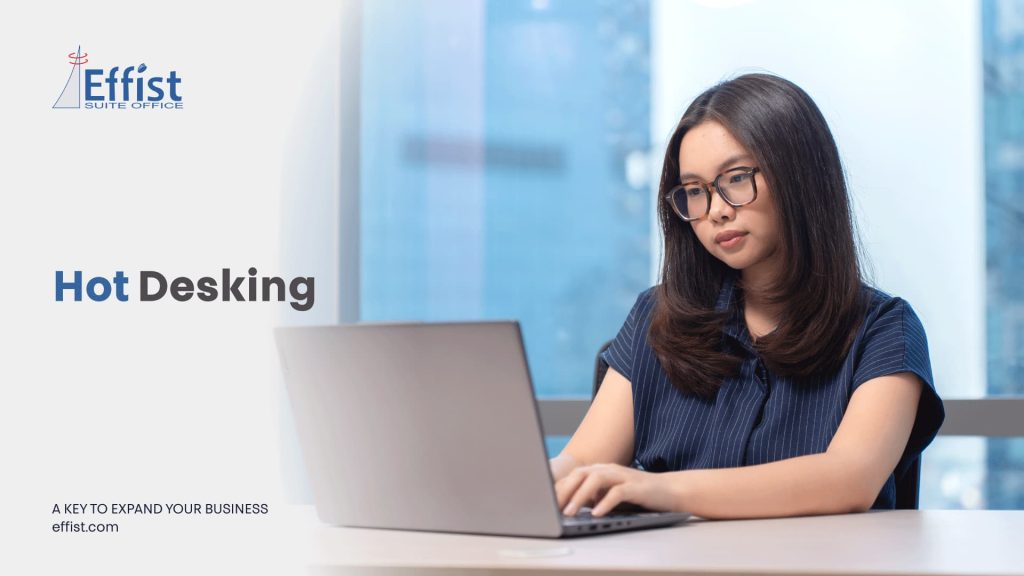
Hot desking refers to a flexible workspace system where employees don't have a permanent desk, and they can move to another one every day. Hot desk area is commonly found in a shared office area like coworking space where seating arrangement is flexible or based on "first-come-first-serve" basis. Companies that use enclosed office spaces, such as private offices or serviced offices, can also implement a hot desking system depending on their work policy. Hot desk system offers a more flexible work environment to maximize collaboration and productivity.
Both hot desking and open space offices are workplace arrangements designed for a more collaborative environment. However, they can be slightly different, especially in terms of what each concept refers to. For example, hot desking model generally focuses on flexible desk allocation, meaning employees do not have a permanently assigned desk. Instead, they use available desks or reserve one from the booking system when they need to work in office.
On the other hand, an open office describes the physical layout of a workplace, where employees work in a shared and open area with fewer walls or cubicles. Employees may still have their own assigned desks, but they work in the same open environment. Many hot desking models combine with open office layout to encourage communication and more efficient use of office space.
With its dynamic environment, hot desking has become an attractive working arrangement for many types of businesses, including:
One challenge many startups face is a limited budget. They often struggle to allocate their budget between product innovation and operational needs. They can use hot desking system to accommodate changing team size without having to expand their office space. Hot desking also provides greater flexibility as teams grow or work arrangements change.
Creative agencies can benefit from hot desking as their team often work on different projects and have flexible schedules. Their employees may not need a dedicated desk every day, allowing the company to share desks more efficiently. The hot desk arrangement also encourages employees from different teams to work together, exchange new ideas, and gain fresh perspectives, which benefits the creative process.
Hot desking serves as a flexible alternative to working from home or renting an office. As they usually work independently and only need a basic workspace, hot desking offers access to a professional work setting without the cost of maintaining a permanent office. It can also help freelancers who occasionally need meeting space or a more professional setting for focused work.
Even when working off-site, hybrid and remote teams may still need physical office space for collaboration or client meetings. Rather than renting an office space, they can utilize hot desking. Since not everyone is physically present at the same time, they can accommodate more employees with fewer permanent workstations.
Consulting firms usually spend their time visiting clients, attending meetings, or working on-site. Their working location typically changes depending on their schedules or the project they handle. Hot desking gives consultants the flexibility to choose an available workspace based on their current needs. It also provides a shared area for project teams to sit together when they need to collaborate.
Hot desking offers various benefits for your business, including:
One of the main advantages of hot desking is lower operational costs. With a hot desk system, you don't need to provide a dedicated workstation for each employee. This lets you reduce the budget for scaling your office space, especially when your team is growing rapidly. Instead, you can put the budget toward more strategic initiatives, such as product innovation or enhancing customer experience.
The hot desk system lets team members sit wherever they want. It helps them to meet new people from different teams and create more opportunities for communication, knowledge sharing, and collaboration between teams. This flexible seating can also build a synergistic atmosphere that strengthens teamwork.
Different work needs often require different workstations, which dedicated desks may not accommodate effectively. Some employees want a more secluded area for focused work, while others are more productive in lively environments. Hot desking offers employees more freedom and flexibility to choose where they sit based on their needs.
Hot desking helps your business use existing office space more effectively. Instead of leaving some workstations unused when employees work remotely, you can make the same desks available to other employees. This is especially important if your company implements a hybrid or remote working policy. You can use these unused spaces more efficiently and dedicate more areas to meeting rooms, lounges, or collaborative areas.
Another advantage of hot desking is increased employee productivity. Instead of confining employees to assigned desks, employees can select a quiet workstation when they need to concentrate, a collaborative area when working with colleagues, or a meeting space when discussing projects. Employees can work more productively and efficiently in their chosen place, leading to higher work satisfaction and better business outcomes.
Hot desking helps businesses become more agile by allowing employees to use workstations based on their daily needs rather than being tied to fixed desks. This flexibility makes it easier to accommodate changing team sizes or shifting business requirements without having to invest in additional workstations.
Considering hot desking for your office? These best practices will help you roll it out successfully in your office:
First, create a clear policy stating the hot desking rules, including what your employees should and should not do. For example, as the employees can sit wherever they want, they shouldn't leave any clutter after using the desk. You should also decide if the desks can be used freely or must be booked in advance, or if there are different zones available (e.g. collaborative zone or quiet zone). Although hot desking focuses on freedom and flexibility, without a clear policy, it can lead to confusion, making the implementation ineffective in a long run.
When implementing flexible seating like hot desking, every desk must be ready to use with the basic equipment employees need for daily work. This includes fast and reliable internet connection, nearby power outlets, or personal storage to put essential items, and they have to be properly connected and functional. It ensures every desk is used without the employees needing to set up additional equipment, allowing them to move between desks smoothly without unnecessary interruptions.
Clean desk culture means that every desk must be free from any clutter after being used. This helps the shared workspaces to stay organized and ready for the next user. Clean desk culture includes trash disposal, removing personal items from desks, and returning equipment to its designated place. Consider providing storage lockers and simple desk-cleaning supplies to help your employees maintain a clean and healthy workspace.
Choose an office space provider that can support your hot desking policy with flexible workspaces, reliable facilities, and essential office amenities. Look for providers that offer well-equipped workstations, high-speed internet, meeting rooms, storage options, and professional support services. The right provider can make it easier for you to manage shared workspaces while ensuring employees have a comfortable and productive environment.
The right office space provider knows how to accommodate businesses with different work needs. Finding a professional, trusted office space provider is a great start to implementing an effective hot desking policy. As a renowned office space provider in South Jakarta, Effist Suite Office is ready to provide your workspace needs through our serviced office solution. Located in the strategic business hubs of South Jakarta, EightyEight@Kasablanka and Gandaria 8 Office Tower offer workspaces suitable for many kinds of businesses, from startups and consulting firms to creative teams and established companies.
Our workspaces come with complete amenities, including ergonomic workstations, high-speed internet, meeting rooms of various sizes, executive office equipment, and support services such as secretarial, receptionist, and cleaning assistance. By choosing Effist Suite Office, you gain not only a flexible workspace but also a reliable partner that lets you focus on running your business.
Contact us through email contact@effist.com for more information regarding our serviced office solution.
Editor: Trie Ayu Feminin & Irnadia Fardila
13 October 2026
Ruang kantor memainkan peran penting dalam mendukung produktivitas dan kenyamanan karyawan serta kelancaran operasional bisnis. Oleh karena itu, memilih ruang kerja yang sesuai dengan kebutuhan perusahaan menjadi aspek krusial yang perlu dipertimbangkan. Salah satu pilihan yang semakin populer adalah private office, khususnya bagi bisnis yang membutuhkan ruang kerja yang lebih privat dan profesional di kawasan strategis seperti Jakarta.
Artikel ini akan membahas lebih lanjut tentang private office di Jakarta, termasuk faktor pertimbangan saat memilih serta rekomendasi layanan private office di Jakarta.
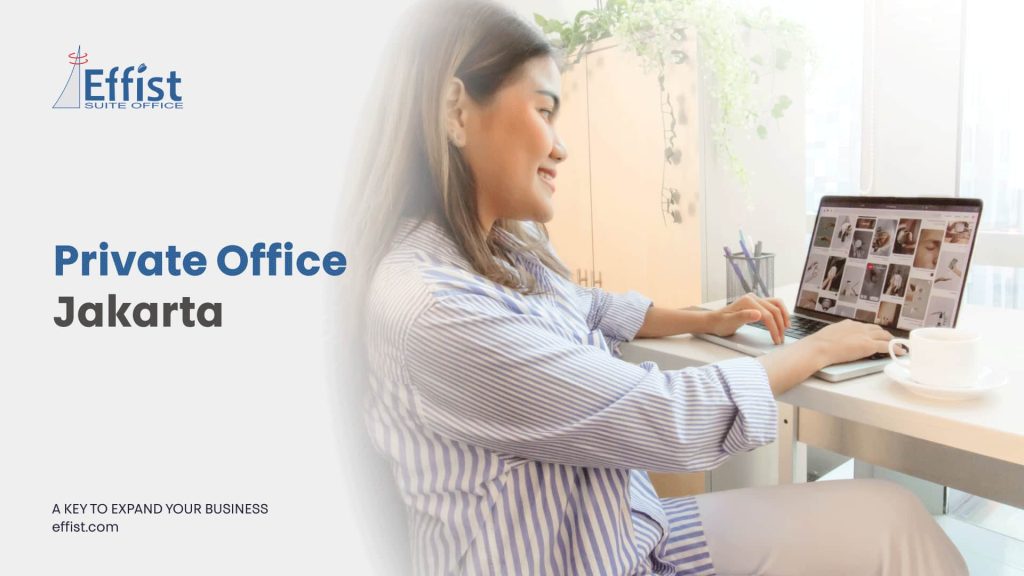
Private office adalah jenis ruang kantor tertutup yang didedikasikan untuk satu orang atau satu tim. Berbeda dari jenis ruang kantor open space yang terbuka, private office memberikan lebih banyak privasi dan keamanan, terutama bagi bisnis yang menginginkan suasana kondusif untuk produktivitas kerja optimal. Banyak penyedia layanan serviced office, seperti Effist Suite Office, menawarkan private office sebagai ruang kantor siap pakai yang dapat disewa oleh perusahaan atau individu yang membutuhkan lingkungan kerja profesional.
Sebagai salah satu kawasan bisnis strategis, Jakarta menawarkan banyak opsi ruang kerja yang dapat disewa perusahaan sesuai kebutuhan mereka. Tiga opsi ruang kerja yang paling umum ditemukan di Jakarta adalah private office, coworking space, dan kantor konvensional. Ketiganya memiliki karakteristik tersendiri yang perlu diketahui sebelum memilih ruang kantor yang tepat:
| Aspek | Private Office | Coworking Space | Kantor Konvensional |
| Definisi | Ruang kantor tertutup yang hanya dipakai oleh satu perusahaan atau tim tertentu | Ruang kantor bersama dengan tampilan open space yang dipakai oleh banyak perusahaan atau individu | Gedung atau ruang kantor yang disewa atau dimiliki secara khusus oleh suatu perusahaan |
| Level Privasi | Tinggi; ruangan bersifat tertutup dan bisa dikunci | Rendah hingga sedang; area kerja digunakan dengan perusahaan atau tim lain | Tinggi; ruang kantor dimiliki sepenuhnya oleh perusahaan |
| Fleksibilitas | Tinggi; bisa disewa dengan pilihan ruangan dan durasi sewa yang fleksibel | Sangat tinggi, terutama yang menerapkan sistem hot desking | Rendah; perusahaan dapat terikat kontrak sewa yang panjang |
| Biaya | Biaya relatif terjangkau; ruangan bisa disewa sesuai kapasitas dan sudah dilengkapi fasilitas kantor | Biaya relatif terjangkau; biaya dapat disesuaikan dengan pemakaian meja atau ruangan | Biaya dapat lebih mahal karena menanggung sewa, renovasi, dan pemeliharaan sendiri |
| Pengelolaan Kantor | Sebagian besar dilakukan oleh penyedia layanan | Dilakukan oleh penyedia coworking space | Dilakukan oleh perusahaan atau pengelola gedung |
| Cocok Untuk | Startup, perusahaan asing yang ekspansi, firma profesional, perusahaan yang memerlukan privasi | Startup, agensi kreatif, pekerja remote, tim kecil, freelancer | Perusahaan yang membutuhkan ruang permanen dan kontrol penuh atas operasional kantor |
Sewa private office di Jakarta menawarkan banyak keuntungan menarik untuk perusahaan, seperti:
Jakarta banyak diminati sebagai lokasi perusahaan karena kawasannya yang strategis serta mudah dijangkau dengan berbagai moda transportasi, baik itu transportasi umum maupun transportasi pribadi. Banyaknya opsi transportasi membuat karyawan, klien, atau mitra bisnis lebih mudah mencapai lokasi kantor Anda tanpa banyak hambatan, terutama bagi mereka yang berasal dari daerah lain.
Penyedia layanan private office umumnya sudah dilengkapi dengan fasilitas kantor yang memadai. Contohnya adalah meja dan kursi kantor, laci penyimpanan, jaringan internet, akses ke ruang meeting, serta fasilitas bersama seperti pantry dan business lounge. Bisnis Anda dapat langsung beroperasi tanpa perlu melakukan pengadaan fasilitas tambahan.
Beberapa jenis perusahaan memerlukan ruang kantor dengan tingkat privasi yang tinggi, terutama jika mereka menangani data sensitif setiap hari. Di area kerja bersama seperti coworking space, orang asing dapat menguping diskusi Anda, sehingga risiko kebocoran informasi menjadi lebih besar. Private working space di Jakarta menawarkan ruang kerja dengan level privasi tinggi yang cocok untuk menerima klien atau mengelola data yang bersifat rahasia.
Level privasi yang tinggi di private office Jakarta mendukung lingkungan kerja yang kondusif. Pada ruang kerja dengan desain open space, Anda dapat dengan mudah terdistraksi oleh orang lain yang berlalu-lalang, sehingga menurunkan fokus selama bekerja. Private office menghadirkan ruangan tertutup yang didedikasikan khusus untuk tim Anda, sehingga produktivitas kerja dapat menjadi lebih optimal.
Kesan pertama dari klien atau mitra bisnis juga memengaruhi hubungan yang dibangun dengan perusahaan Anda. Di sinilah pentingnya private office modern di Jakarta untuk mewujudkan citra bisnis perusahaan yang kredibel dan profesional. Hal ini bermanfaat bagi startup atau bisnis lainnya yang ingin membangun kepercayaan dari klien dan mitra bisnis untuk hubungan yang berkelanjutan.
Berikut adalah beberapa faktor yang perlu dipertimbangkan saat memilih private office sesuai kebutuhan bisnis Anda:
Bagi Anda yang mencari private office di Jakarta, berikut adalah beberapa rekomendasi yang bisa Anda pertimbangkan:
Rekomendasi layanan private office di Jakarta yang pertama adalah Effist Suite Office di gedung EightyEight@Kasablanka. Layanan private office hadir sebagai layanan serviced office yang menyediakan ruang kantor siap pakai. Effist Suite Office berlokasi strategis di kawasan Tebet dengan akses mudah ke transportasi publik seperti TransJakarta, KRL, dan LRT. Private office ini cocok untuk Anda yang membutuhkan akses mudah ke kawasan bisnis Jakarta lainnya, seperti Kuningan dan Sudirman. Effist Suite Office di EightyEight@Kasablanka menawarkan suasana kerja yang dinamis serta terintegrasi dengan pusat perbelanjaan dan apartemen.
Selain keunggulan lokasi, layanan serviced office dari Effist juga dilengkapi dengan fasilitas premium. Hal ini meliputi ruang kerja siap pakai dengan perlengkapan perkantoran, internet berkecepatan tinggi, layanan resepsionis profesional, business lounge, hingga akses ke meeting room untuk memfasilitasi pertemuan bisnis Anda. Lingkungan kerja yang modern dan fleksibel membuat Effist Suite Office di EightyEight@Kasablanka menjadi solusi ideal untuk bisnis yang memerlukan lingkungan kerja dinamis dengan mobilitas tinggi.
Rekomendasi layanan private office berikutnya adalah Effist Suite Office di gedung Gandaria 8 Tower. Layanan private office ini tersedia dalam layanan serviced office dengan lingkungan kerja yang premium dan eksklusif. Effist Suite Office berlokasi di kawasan strategis yang dekat dengan kawasan Kebayoran Lama dan Pondok Indah. Lokasinya berada di Gandaria Superblok yang terintegrasi dengan pusat perbelanjaan, jalan utama, transportasi umum, serta fasilitas pendukung lainnya.
Effist Suite Office di Gandaria 8 Tower mendukung operasional bisnis yang efisien melalui layanan ruang kantor siap pakai dengan fasilitas perkantoran yang lengkap. Anda juga dapat menikmati akses internet berkecepatan tinggi, business lounge untuk menyambut tamu, pantry, layanan resepsionis profesional, hingga akses ke meeting room dalam berbagai ukuran. Layanan serviced office Effist di Gandaria 8 Tower ini cocok untuk membangun citra perusahaan yang profesional dan lingkungan kerja yang premium.
Memilih private office yang tepat merupakan langkah penting untuk mendukung kelancaran operasional bisnis Anda. Sebagai salah satu penyedia office space ternama di Jakarta Selatan, Effist Suite Office hadir dengan layanan serviced office untuk memfasilitasi kebutuhan ruang kantor siap pakai bagi perusahaan dalam berbagai skala. Effist Suite Office berlokasi strategis di kawasan bisnis Jakarta Selatan, yaitu EightyEight@Kasablanka dan Gandaria 8 Tower, yang mudah diakses melalui berbagai moda transportasi.
Setiap ruang kantor di Effist Suite Office dilengkapi dengan fasilitas perkantoran modern. Hal ini mencakup meja dan kursi kantor ergonomis, koneksi internet berkecepatan tinggi, perlengkapan kantor eksekutif, akses ke meeting room dalam berbagai ukuran, business lounge, pantry, serta layanan sekretaris, resepsionis, dan kebersihan. Anda dapat langsung pindah dan mulai bekerja, sementara tim Effist Suite Office menangani kebutuhan operasional kantor Anda.
Hubungi kami melalui email contact@effist.com untuk informasi lebih lanjut seputar layanan serviced office atau mulai konsultasi seputar kebutuhan private office Anda.
Editor: Trie Ayu Feminin & Irnadia Fardila